Have you ever been searching through precious metal coins, you might have been able to see that certain coins
appear to be a lot more well-polished and refined than others. They are referred to as proof coins; they are
made with high precision to suit the collectors.
A lot of beginners will ask, what is a proof coin, and why does it appear so different compared to the usual
coins. Its solution is found in its specialized mint and high finish.
In this guide, you will get to know the meaning of the proof coins, how they are produced, why they are not just
like other coins, and whether they are worth purchasing.
What Is a Proof Coin?
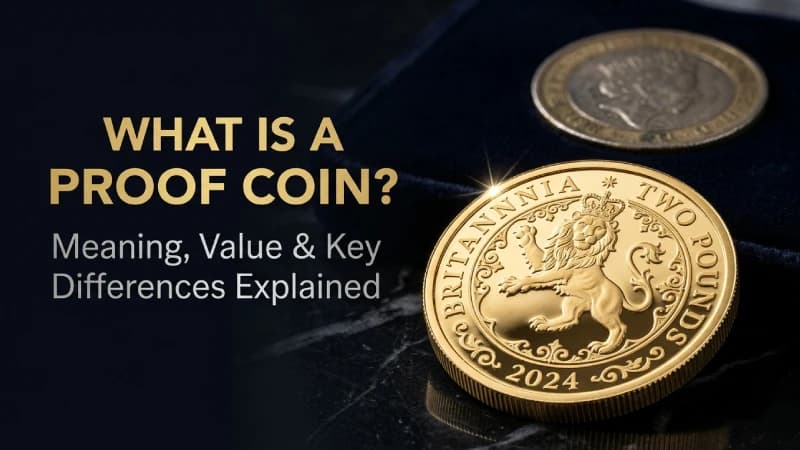
A proof coin is a specially minted coin made using polished dies and multiple strikes to create a highly
detailed, mirror-like finish. These coins are designed for collectors and are not intended for circulation.
Understanding what a proof coin is helps collectors recognize its exclusivity.
Key Takeaways
- A proof coin is a specially minted coin designed for collectors, not for circulation
- Understanding what is a proof coin helps identify its superior quality and craftsmanship
- Proof coins feature mirror-like surfaces, frosted designs, and sharp details
- The proof coin minting process involves polished dies and multiple strikes
- Proof coins typically carry higher premiums than regular bullion coins
- The value of proof coins depends on both metal content and collector demand
- Knowing how to identify a proof coin helps ensure authenticity and quality
- Proof coins are ideal for collectors, while bullion coins may suit investment-focused buyers
What Makes Proof Coins Different?
The coins called proof coins are characterized by their appearance and quality:
- Mirror-like reflective surfaces
- Frosted design elements
- Sharp, well-defined edges
- Single-serving and packaged
These characteristics make them easily distinguishable from normal bullion or circulation coins.
How Proof Coins Are Made
What makes these coins look premium is the process of proof coin minting:
Polished Planchets
Blanks of metal are polished to eliminate defects.
Polished Dies
Dies are also polished to make them reflective in the background.
Multiple Strikes
Proof coins are struck multiple times, resulting in sharper details,
deeper engravings, and enhanced finish.
Individual Handling
The coins are treated with care so as to avoid breaking.
And this turns a common coin into a masterpiece to be collected.
Proof Coin vs Regular Coin
Understanding the difference between a proof coin vs regular coin:
| Feature |
Proof Coins |
Regular Coins |
| Purpose |
Collectors |
Circulation |
| Finish |
Mirror-like |
Standard |
| Striking |
Multiple times |
Once |
| Handling |
Individual |
Mass produced |
| Packaging |
Protective |
Loose |
Due to their high-quality production, the premiums of the proof coins are usually high.
Proof Coin vs Uncirculated Coin
The other significant comparison is a proof coin vs uncirculated coin:
Proof Coins
Struck several times, specially polished for exceptional visual appeal and collectibility.
Uncirculated Coins
Mint condition, but not particularly treated for special visual characteristics.
The visual appeal and collectibility would be greater on proof coins.
Are Proof Coins Worth Buying?
One of the questions is: Do proof coins make good purchases?
Advantages:
- Exceptional craftsmanship
- Few coins are minted, which makes them rare.
- Strong collector demand
- Potential long-term value
Considerations:
- Higher premiums than bullion coins.
- Prices are affected by the interest of the collector.
Quick Summary:
Proof coins are preferred by collectors, while bullion coins are preferred by investors.
What Metals Are Used in Proof Coins?
Proof coins are produced from many metallic ones, such as:
They are limited and valuable according to the quantity of metal in them and the demand of collectors.
How to Identify a Proof Coin
To know how to determine a proof coin, look in:
- Mirror-like surface
- Frosted design details
- Sharp, clean edges
- Official mint packaging
Certified coins are also preferred by a great number of collectors due to assured authenticity.
Do Proof Coins Increase in Value?
Proof coins are coins that may gain value with time, particularly when they are:
- Limited edition releases
- High-grade (e.g., PR69 or PR70)
- From popular coin series
Nonetheless, their value is not hinged on only metal price, but also on demand.
Expert Tips to Protect Your Proof Coins
→
Keep coins in original capsules
→
Do not use bare hands when handling
→
Store in a cool, dry place
→
Buy from trusted dealers
→
Get coins certified when possible
→
Keep detailed inventory records
Why Trust Us?
At Bold Precious Metals, we work
with trusted global mints and have years of experience in the precious
metals industry, helping collectors and investors make informed decisions.
FAQ
1. What is a proof coin in simple terms?
A proof coin is a high-quality coin made for collectors with a mirror-like finish and detailed design.
2. Are proof coins more valuable?
Yes, they usually carry higher premiums due to their quality and rarity.
3. Can proof coins be used as currency?
They are legal tender but not meant for circulation.
4. What is the difference between proof and bullion coins?
Proof coins focus on collectibility, while bullion coins are valued mainly for metal content.
Conclusion
As you know now what a proof coin is, you can easily guess why these coins are so much appreciated. They are
known for craftsmanship, rarity, and visual appeal, making them an excellent choice for collectors.
For beginners or those who are growing their collection, proof coins are a rare commodity, both in terms of
beauty and value in the precious metals market.