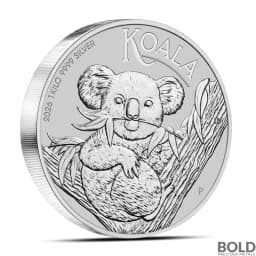
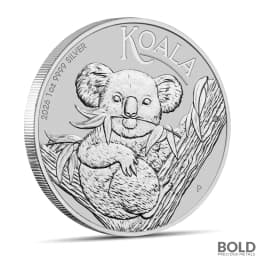
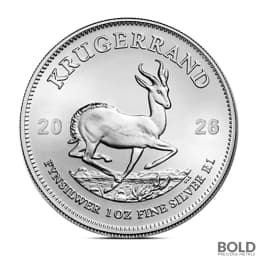
The IRS sets its silver IRA standards under Internal Revenue Code Section 408(m). Both requirements must be met simultaneously — passing one but not the other disqualifies the product entirely.
Requirement 1 — Minimum Purity
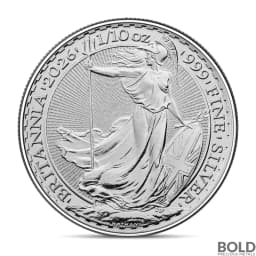
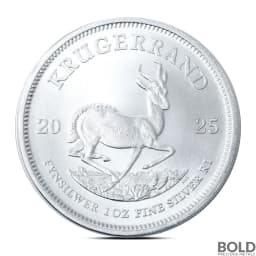
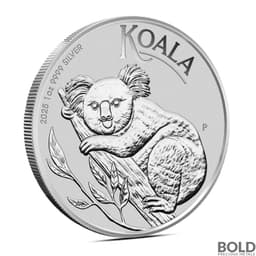
Minimum purity of .999 fine silver (99.9% pure) — with one government-backed exception:
Requirement 2 — Approved Manufacturer
Produced by an approved refiner, assayer, or manufacturer — or issued directly by a sovereign government mint:
Dealer Insight — Ryan Cochran
The single most common IRA silver mistake I see is buyers assuming any .999 fine silver product is automatically eligible. Purity is necessary but not sufficient. The refiner or mint must also be approved. This trips up buyers who purchase from newer or smaller private mints — the silver is real and pure, but if the mint isn't on the COMEX/NYMEX approved list, no custodian will accept it. Stick to sovereign mint coins or LBMA-approved bars when in doubt. That's why BOLD only lists pre-vetted products on this page.
The honest answer depends on your priorities: maximum silver weight per dollar, long-term resale liquidity, or custodian acceptance. Here's the full breakdown across every eligible format.
| Product Type | IRS Eligible | Min. Purity | Resale Liquidity | Typical Premium | Best For |
|---|---|---|---|---|---|
| American Silver Eagle | Yes | .999 fine | Highest | 3–5% | Long-term holders, easiest liquidation |
| Canadian Silver Maple Leaf | Yes | .9999 fine | High | 2–4% | Purity-focused buyers, sovereign diversification |
| Austrian Silver Philharmonic | Yes | .999 fine | High | 2–4% | European mint diversification |
| Silver Bars (LBMA/COMEX approved) | Yes | .999 fine | Moderate | 1–2% | Maximum silver weight per dollar |
| Silver Rounds (approved refiners) | Yes | .999 fine | Lower | 1.5–2.5% | Budget-focused accumulation |
| Junk Silver / Pre-1965 U.S. Coins | No | Below .999 | High (outside IRA) | Varies | NOT IRA eligible |
| Collectible / Numismatic Coins | No | Varies | Varies | Very High | NOT IRA eligible |
Ryan's Allocation Recommendation
Most IRA custodians prefer government-issued coins — particularly American Silver Eagles — because liquidation at the back end is fast, recognized, and hassle-free. If you want maximum silver weight, LBMA-approved bars from PAMP Suisse, Sunshine Mint, or Valcambi give you more metal per dollar. My standard recommendation to new silver IRA buyers: 60% government coins, 40% approved bars. That balance gives you liquidity insurance while keeping your cost-per-ounce competitive.
Every product below has been verified against IRS eligibility requirements and is accepted by all major U.S. IRA custodians.
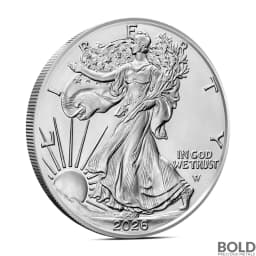
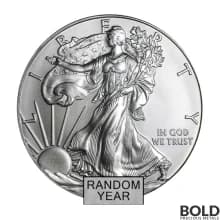
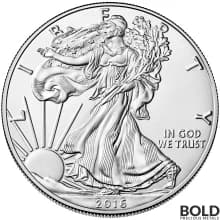
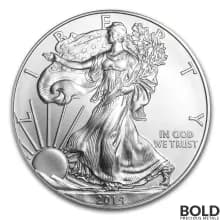
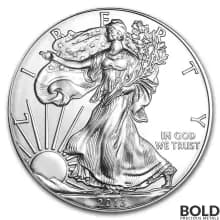
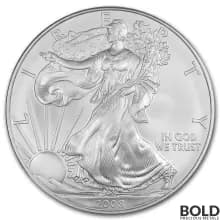
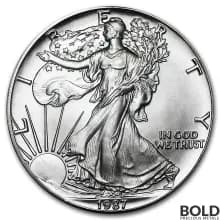
The only coin explicitly named in IRS guidance as IRA-eligible regardless of year of issue. Every annual release qualifies. The 2021 Type 2 redesign introduced a bold heraldic eagle reverse now recognized worldwide. Available in single coins, tubes of 20, or monster boxes of 500 for maximum bulk savings.
Shop American Silver EaglesStruck by the Royal Canadian Mint at .9999 fine — the highest purity of any major government silver coin in the world. Features radial line security and a micro-engraved privy mark that makes counterfeiting significantly harder than on most sovereign coins. Fully IRA eligible and accepted by all major U.S. custodians.
Shop Canadian Silver Maple LeafsEurope's best-selling silver bullion coin, issued annually by the Austrian Mint since 2008 at .999 fine. Features the Great Organ of the Viennese Musikverein — one of the most distinctive designs in global sovereign coinage. IRA eligible and popular with investors who want geographic and mint diversification in their retirement stack.
Shop Silver PhilharmonicsLBMA-approved bars from PAMP Suisse, Valcambi, Sunshine Mint, Royal Canadian Mint, and Engelhard carry the lowest premiums in the IRA silver category — typically 1–2% over spot versus 3–5% for government coins. Best for buyers whose primary goal is accumulating the most silver ounces per dollar invested.
Shop Silver BarsOverlooked Fact — American Silver Eagle Mintage Strategy
The U.S. Mint produced over 47 million American Silver Eagle coins in 2015 — its highest annual mintage on record. High mintage years mean abundant supply and tighter premiums, making them cost-efficient for IRA accumulation. Low-mintage years (like 2019 at roughly 14 million) carry higher collector premiums that don't benefit IRA buyers. For IRA purposes, buy high-mintage years when available — IRA eligibility is identical regardless of year.
The mechanics of a silver IRA are straightforward. Here's exactly how the process works.
Open a Self-Directed IRA (SDIRA) with a precious metals custodian
Your standard brokerage IRA won't hold physical silver — you need a custodian that specializes in alternative assets. Widely used options include Equity Trust Company, GoldStar Trust, and Kingdom Trust. Setup typically takes 3–7 business days.
Fund your SDIRA via rollover or direct contribution
Roll over funds from an existing IRA, 401(k), 403(b), or TSP without triggering taxes. Direct contributions are subject to annual IRS limits: $7,000 in 2024 ($8,000 if you're age 50 or older). Rollover amounts have no annual cap.
Purchase IRA approved silver through BOLD — we ship directly to your depository
After selecting your products, your custodian handles purchase authorization and coordinates delivery to an IRS-approved depository. Most commonly used: Delaware Depository, Brinks Global Services, and International Depository Services. BOLD ships directly to your approved depository.
Critical IRS Rule — No Home Storage
You cannot take personal possession of IRA silver while it remains in the account. All metals must be stored at an IRS-approved third-party depository. Taking physical possession before age 59½ triggers ordinary income tax on the distribution value plus a 10% early withdrawal penalty. This is a hard rule with no workarounds.
Dealer Insight — Storage Fee Math
One thing no one tells first-time silver IRA buyers: storage fees at depositories are typically flat annual fees, not percentage-based — meaning the cost-per-ounce of storage decreases as your position grows. A 1,000-oz silver IRA and a 200-oz silver IRA often pay the same flat fee. If you're committed to building a silver IRA, there's a meaningful efficiency argument for front-loading your position early rather than accumulating slowly.
Silver's lower price per ounce means you can build a meaningful retirement position with significantly less capital — and it has historically been one of the most effective portfolio diversifiers during inflationary periods. Here's how to think about allocation by position size.
Silver gives you more product variety, more flexibility in position sizing, and more room to accumulate ounces over time. The lower per-ounce price makes meaningful accumulation achievable at this level.
Gold for capital preservation, silver for upside exposure. The silver-to-gold ratio signal matters here — when it spikes above 80:1, silver historically represents better relative value than gold on a unit basis.
Gold dominates purely for storage efficiency at this level. Silver's bulk means higher storage costs per dollar of value held. At $100,000+, the storage math shifts meaningfully in gold's favor for the core allocation.
The IRS requires a minimum purity of .999 fine silver (99.9% pure) for inclusion in a self-directed precious metals IRA under IRC Section 408(m). The only exception is the American Silver Eagle, which contains a small copper alloy for durability but is explicitly IRA-eligible due to its U.S. government-issued status.
Yes. American Silver Eagles are explicitly IRA eligible regardless of year of issue. They are the most custodian-accepted and liquid IRA silver product in the U.S. market. Every annual release — including the 2021 Type 2 redesign and all subsequent issues — qualifies for self-directed IRA inclusion.
Silver rounds can be IRA eligible if they are struck by a COMEX- or NYMEX-approved refiner at .999 fine purity or better. Not all private mint rounds qualify — the refiner's accreditation status determines eligibility, not purity alone. All rounds listed on BOLD's IRA approved silver page are pre-vetted for custodian acceptance.
No. IRS rules require all precious metals held in an IRA to be stored at an IRS-approved third-party depository. Taking personal possession while the metals remain in the IRA constitutes a distribution, triggering income tax and — if you're under age 59½ — a 10% early withdrawal penalty. This is a hard rule with no workarounds.
Silver bars must be .999 fine (99.9% pure) at minimum and must be produced by an LBMA-approved, COMEX-approved, or equivalent nationally accredited refiner to qualify for IRA inclusion. Top refiners accepted by all major U.S. custodians include PAMP Suisse, Valcambi, Sunshine Mint, Royal Canadian Mint, and Engelhard.
Yes. You can roll over funds from an existing 401(k), 403(b), TSP, or traditional IRA into a self-directed precious metals IRA without triggering taxes, provided the rollover is executed correctly. Rollover amounts have no annual cap. Direct contributions are subject to IRS annual limits ($7,000 in 2024; $8,000 if age 50 or older). Contact our IRA team for rollover coordination and custodian introductions.
Every Product Pre-Vetted · IRS Compliant · Ships to Your Depository
A+ BBB-rated · 100,000+ Investors Served · IRA Team Available · Free Insured Shipping $199+ · Direct Depository Shipping


Affiliations


Copyright BOLD Precious Metals 2026