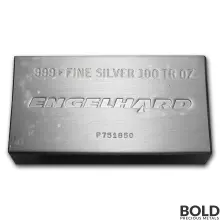
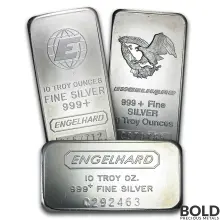
Engelhard Silver Bars offer investors a reliable way to own .999 fine silver from a highly respected historic refiner, valued for strong demand and classic bullion appeal.

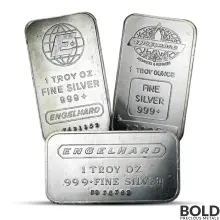
1 oz Engelhard Silver Bar
Out of Stock
Buy genuine Engelhard silver bars at BOLD Precious Metals, a trusted U.S. bullion dealer serving investors and collectors since 2015. Engelhard was one of the most respected names in precious metals refining, producing silver bullion bars that remain highly sought after decades after production ended.
All Engelhard silver bars offered by BOLD are sourced through the secondary market and contain .999 fine silver. Because Engelhard no longer manufactures bullion products, available inventory is limited and changes frequently. Every order ships fully insured, and domestic orders over $199 qualify for free shipping.
|
Size |
Purity |
Market Status |
Best For |
|
1 oz Engelhard Silver Bar |
.999 Fine |
Secondary Market |
Collectors, New Investors |
|
3 oz Engelhard Silver Bar |
.999 Fine |
Secondary Market |
Collectors |
|
5 oz Engelhard Silver Bar |
.999 Fine |
Secondary Market |
Mid-Size Investors |
|
10 oz Engelhard Silver Bar |
.999 Fine |
Secondary Market |
Most Popular Format |
|
100 oz Engelhard Silver Bar |
.999 Fine |
Secondary Market |
Large Silver Positions |
Founded in 1902, Engelhard grew into one of the world's most respected precious metals refiners. Operating from Newark, New Jersey, the company became a major force in refining, industrial chemicals, and precious metals processing. By the mid-twentieth century, Engelhard was recognized as one of the largest precious metals refiners in the world.
During the 1970s and 1980s, Engelhard produced silver bullion bars in a range of sizes that became popular with investors across North America. The company's reputation was built on accurate weight and purity markings, consistent manufacturing standards, and broad dealer recognition.
Engelhard eventually exited the retail bullion market and was later acquired by BASF in 2006. Since then, no new Engelhard silver bars have been produced.
Today, every Engelhard silver bar available for purchase comes from existing private holdings, making them a recognized form of vintage bullion.
Many silver bars are valued primarily for their metal content. Engelhard bars often command additional premiums because they combine silver ownership with the appeal of a discontinued and highly recognized brand.
Unlike modern bullion products that can be manufactured to meet demand, the supply of Engelhard bars is fixed. No new bars are entering the market, and existing examples continue to move into long-term collections and investor holdings.
The available supply has also been reduced over time as some bars were melted during previous periods of high silver prices. As a result, certain sizes and varieties have become increasingly difficult to locate.
For generations, dealers and investors have associated the Engelhard name with quality refining and reliable bullion products.
That recognition remains valuable today. Vintage Engelhard bars are widely known throughout the precious metals market and continue to enjoy strong demand among both collectors and investors.
Common 10 oz Engelhard bars generally carry modest premiums over spot silver, while scarcer sizes, vintage poured bars, and rare varieties may command significantly higher premiums.
Condition, serial number style, and production era can all influence market value.
Engelhard produced both cast and minted silver bars.
Cast bars were created by pouring molten silver into molds. They typically feature softer edges, cooling marks, and unique surface textures that make each piece slightly different.
Minted bars were mechanically pressed, producing a cleaner appearance with sharper details and more uniform dimensions.
Collectors often prefer poured bars because of their vintage character, while investors frequently choose minted bars for their consistency and ease of storage.
The 1 oz Engelhard silver bar is one of the most collectible sizes in the series.
Over the years, Engelhard produced several design variations featuring different logos and hallmark styles. These include the classic Engelhard "E," the Globe E design, and the Bull and Bear emblem.
Because of their variety and limited surviving supply, 1 oz bars are especially popular among collectors.
The 10 oz format remains the most widely traded Engelhard bar.
It offers a balance between affordability, liquidity, and silver content, making it a favorite among investors. Most examples feature serial numbers that assist with identification and authentication.
For many buyers, the 10 oz bar represents the ideal combination of collectibility and practicality.
The 100 oz Engelhard silver bar is the largest standard size commonly encountered in the secondary market.
These bars typically feature simple hallmarking, cast surfaces, and substantial silver content. Investors often favor the 100 oz format because it provides lower premiums per ounce and efficient storage for larger silver positions.
Although not bars, Engelhard Prospector Rounds are among the most recognized products the company ever produced.
Each contains 1 troy ounce of silver and features the iconic prospector design. Today, Prospectors remain highly collectible and are frequently purchased alongside Engelhard bars by dedicated collectors.
Engelhard silver bars appeal to investors seeking more than standard bullion.
They offer exposure to physical silver while also benefiting from the recognition and collectibility associated with a discontinued refinery. This combination has helped Engelhard bars maintain strong demand for decades.
However, buyers should understand that premiums are part of the investment equation. Because Engelhard bars often sell above spot price, the collectible premium should be considered alongside the underlying silver value.
For investors who appreciate vintage bullion and established brands, Engelhard remains one of the most respected names in the market.
Because Engelhard bars are widely collected, authentication is important.
Authentic bars feature the correct Engelhard logo, weight markings, and purity stamps appropriate for their production period.
A genuine bar should match expected weight and dimensions for its size. Precision scales and calipers are commonly used during verification.
Many Engelhard bars include serial numbers. These should be clearly stamped and consistent with known production formats.
The simplest way to avoid counterfeit products is to purchase through reputable bullion dealers with established authentication procedures.
BOLD Precious Metals guarantees the authenticity of every Engelhard bar sold through its inventory.
All Engelhard silver bars sold today are secondary-market products.
Because these bars are no longer produced, most examples show some evidence of age and previous ownership. Common characteristics may include:
These features do not affect silver content, weight, or purity and are normal for vintage bullion.
Many collectors actually prefer bars that retain signs of age, viewing them as part of their history and authenticity.
Proper storage helps preserve both bullion value and collector appeal.
Store bars individually in Mylar or polypropylene flips to minimize contact and reduce surface wear.
Silver tarnishes more quickly in humid environments. A cool, dry location helps preserve appearance over time.
For larger collections, consider a quality home safe or professional vault storage solution.
Whenever possible, handle bars by their edges to avoid transferring oils to the surface.
Engelhard products remain among the most recognizable vintage bullion items in the secondary market.
BOLD Precious Metals purchases Engelhard bars through its Sell To Us program and offers competitive buyback pricing based on current silver values and collectible premiums.
For current pricing, contact the BOLD team directly.
Explore additional silver bullion options:
Engelhard silver bars are .999 fine silver bullion bars produced by Engelhard Corporation, one of the most respected precious metals refiners of the twentieth century. They are no longer manufactured and are available only through the secondary market.
No. Engelhard stopped producing retail bullion bars decades ago, and the company was ultimately acquired by BASF in 2006. No new Engelhard silver bars are being produced today.
Their premiums reflect a combination of silver content, brand recognition, collector demand, and limited supply.
Look for correct hallmarks, weight markings, serial numbers, and dimensions. Purchasing from a reputable dealer is the best protection against counterfeit products.
Common sizes include 1 oz, 3 oz, 5 oz, 10 oz, and 100 oz silver bars, along with various silver rounds and specialty products.
Cast bars are poured into molds and have a more rugged appearance. Minted bars are mechanically pressed and feature sharper details and smoother surfaces.
Many investors value Engelhard bars because they combine physical silver ownership with the collectibility of a discontinued brand.
It means the bar has had at least one previous owner and is being resold through a dealer rather than directly from the original manufacturer.
Yes. Engelhard bars are widely recognized and actively traded throughout the bullion market.
Store them in protective holders, keep them in a dry environment, and handle them carefully to preserve both bullion value and collectible appeal.


Affiliations


Copyright BOLD Precious Metals 2026