

Share
1000 grams .999 fine silver. LBMA-certified, IRA eligible! Leverage your silver investment by purchasing these large silver bars at extremely low premiums.
| Quantity | Cash/Check | Credit Card | Paypal/Pay |
|---|---|---|---|
| 1 - 2 | $2,043.99 | $2,129.84 | $2,156.41 |
| 3 - 4 | $2,040.24 | $2,125.93 | $2,152.45 |
| 5 - 9 | $2,036.49 | $2,122.02 | $2,148.50 |
| 10 - 14 | $2,032.74 | $2,118.12 | $2,144.54 |
| 15 or more | $2,028.99 | $2,114.21 | $2,140.58 |
Share
The 1 Kilo Johnson Matthey Silver Bar is a timeless piece of precious-metal refining history. Featuring the recognizable hallmark of Johnson Matthey, this substantial silver bar contains 1 kilogram of .999 fine silver, equivalent to approximately 32.15 troy ounces.
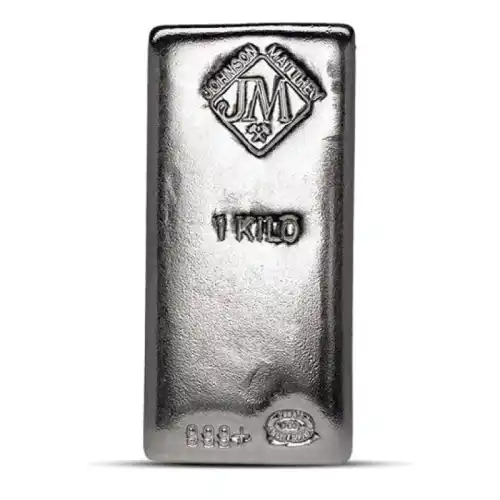
The bar showcases Johnson Matthey's historic diamond-shaped logo, featuring the initials JM and crossed hammers. Its front also displays identifying weight and purity markings, while the reverse retains the natural appearance associated with traditional cast silver bars.
Originally associated with one of the most established names in precious-metal refining, vintage Johnson Matthey silver bars are appreciated for their recognizable hallmarks, substantial weight, and straightforward industrial design. As these bars can originate from different production periods, individual surface characteristics and markings may vary.
The 1 Kilo Johnson Matthey Silver Bar is distinguished by its connection to one of the best-known names in the history of precious-metal refining. Rather than relying on decorative illustrations, the bar uses a simple arrangement of refinery markings to identify its origin and silver specifications.
The central feature is the traditional Johnson Matthey diamond hallmark, which incorporates the initials JM and crossed-hammer imagery. This recognizable emblem appeared on numerous Johnson Matthey precious-metal products during the company's long refining history.
Its straightforward presentation reflects the industrial character of traditional refinery bars, where identifying marks were the primary design elements. The combination of a historic hallmark, substantial silver weight, and natural cast texture gives the bar a noticeably different appearance from modern decorative silver products.
The obverse displays the recognizable Johnson Matthey refinery hallmark. The traditional design features the initials JM positioned above crossed hammers within a diamond-shaped border.
Additional markings identify the bar's essential specifications, including:
Some production versions also include an individual serial number or additional identifying stamps. Because Johnson Matthey kilo bars were manufactured in different facilities and during different periods, the precise placement and style of these markings can vary. The overall composition remains focused on refinery identification rather than elaborate artwork.
The reverse is typically left blank, displaying the natural surface of the cast silver. Unlike a precision-minted bar with a uniform polished finish, a cast bar can show subtle variations created as molten silver cools inside a mold.
These characteristics may include:
The reverse provides a visual contrast to the stamped identifying information on the front. Its relatively plain appearance also highlights the traditional manufacturing method used to produce many historic Johnson Matthey silver bars.
Johnson Matthey's history began in 1817, when Percival Norton Johnson established a gold assaying business in London. In 1851, George Matthey joined the business, helping establish the partnership that became known as Johnson Matthey.
Over the following decades, the company developed extensive expertise in precious-metal refining, assaying, and fabrication. Its activities expanded beyond the United Kingdom, with operations serving different parts of the international precious-metals industry.
Johnson Matthey eventually became associated with gold, silver, platinum, and other refined precious-metal products. Its name and hallmark appeared on numerous bars manufactured during different periods. This long history is part of what makes the Johnson Matthey 1 Kilo Silver Bar recognizable among collectors of historic refinery products.
One of the defining features of this Johnson Matthey bar is its cast construction. Traditional cast silver bars are produced by pouring molten silver into a prepared mold and allowing the metal to cool and solidify. After cooling, the bar receives its required refinery markings and identifying information.
The process can produce slight differences in texture and appearance between individual bars. Unlike precision-minted products, which emphasize highly uniform surfaces, cast bars often retain subtle physical characteristics associated with their production. These differences may include variations in the top surface, edges, and overall texture. For collectors of older refinery products, the natural cast appearance forms an important part of the bar's visual identity.
The 1 kilo silver bar format provides a substantial quantity of silver in one physical piece. A kilogram equals 1,000 grams, which converts to approximately 32.15 troy ounces. This makes the bar significantly heavier than common 1 oz, 5 oz, and 10 oz silver products. Its compact rectangular shape concentrates that weight into a single piece that can be stored alongside other large-format silver bars.
The weight also makes the bar feel noticeably different from smaller minted silver products when handled. Collectors interested in refinery formats can compare the kilogram size with traditional troy-ounce denominations to see how different manufacturers approach large silver-bar production.
Although Johnson Matthey originated in the United Kingdom, the company developed a significant refining presence in North America. Its operations included facilities in Salt Lake City, Utah, and Brampton, Ontario, Canada. Bars associated with these facilities can feature different refinery or assay markings, providing additional information about their production origins.
Some vintage Johnson Matthey kilo bars include individual serial numbers, while others were produced with different identification arrangements. These distinctions have become relevant to collectors who study Johnson Matthey products by refinery location, hallmark style, and production period. In 2015, Asahi Holdings acquired Johnson Matthey's gold and silver refining businesses. As a result, historic Johnson Matthey-produced bars represent an earlier chapter in the company's precious-metal refining history.
The identifying marks on a Johnson Matthey kilo bar provide important information about the product. The JM diamond hallmark identifies the historic refinery brand. The inscription “1 KILO” identifies the bar's nominal weight of one kilogram. A purity marking such as “999+” indicates silver fineness of at least .999.
Depending on the production version, additional stamps may identify the refinery location, assay office, or individual serial number. These markings should be examined together rather than relying on one feature alone.
Collectors seeking a particular Johnson Matthey production variety should compare the hallmark, serial format, assay markings, and physical characteristics with documented examples.
Because many Johnson Matthey kilo bars have circulated through collections and secondary-market inventories for years, their appearance can vary. Some examples retain relatively bright silver surfaces, while others show natural toning, contact marks, or handling characteristics. Cast bars can also display production-related irregularities that are not typically seen on precision-minted products.
These characteristics do not automatically indicate a problem with the bar. However, the exact condition, hallmark arrangement, and presence of a serial number should be evaluated on the individual piece. The general 1 Kilo Johnson Matthey Silver Bar listing should not be interpreted as a guarantee of a particular refinery location, production year, or scarce serial-number variety unless explicitly stated.
A Johnson Matthey kilo bar should be handled carefully to help maintain its existing surface appearance. Whenever practical, hold the bar with clean hands or non-abrasive gloves and avoid dragging it across hard surfaces. Silver can naturally develop toning through exposure to environmental conditions.
Collectors of vintage cast bars often prefer to retain the original surface appearance rather than attempt to remove natural toning or marks. Avoid polishing, abrasive cleaning, or chemical treatments that can alter the bar's original texture and stamped details. Store the bar in a dry, temperature-stable environment, preferably with protective wrapping or other suitable storage materials that will not react with the silver.
| Specification | Details |
|---|---|
| Brand | Johnson Matthey |
| Product | 1 Kilo Silver Bar |
| Metal | Silver |
| Silver Content | 1 Kilogram |
| Weight in Grams | 1,000 Grams |
| Troy Ounce Equivalent | Approx. 32.15 Troy oz |
| Purity | .999 Fine Silver |
| Bar Type | Cast Silver Bar |
| Shape | Rectangular |
| Obverse | Johnson Matthey Hallmark and Specifications |
| Reverse | Typically Blank Cast Surface |
| Hallmark | JM Diamond Logo with Crossed Hammers |
| Weight Marking | 1 Kilo |
| Fineness Marking | 999+ or Equivalent |
| Edge | Smooth |
| Production Year | Varies |
| Refinery Origin | Varies by Production Version |
| Serial Number | May Vary |
| Condition | Vintage / Secondary-Market Characteristics May Vary |
| Packaging | May Vary |
| Maximum Mintage | Not Confirmed for General Listing |
Add the 1 Kilo Johnson Matthey Silver Bar to your collection of historic refinery-branded precious metals. Containing 1 kilogram of .999 fine silver, equivalent to approximately 32.15 troy ounces, this substantial cast bar combines the recognizable JM diamond hallmark with the traditional appearance of a classic refinery product.
Buy the 1 Kilo Johnson Matthey Silver Bar from BOLD Precious Metals and add a distinctive example of Johnson Matthey's silver-refining heritage to your collection.


Affiliations


Copyright BOLD Precious Metals 2026