BOLD Precious Metals
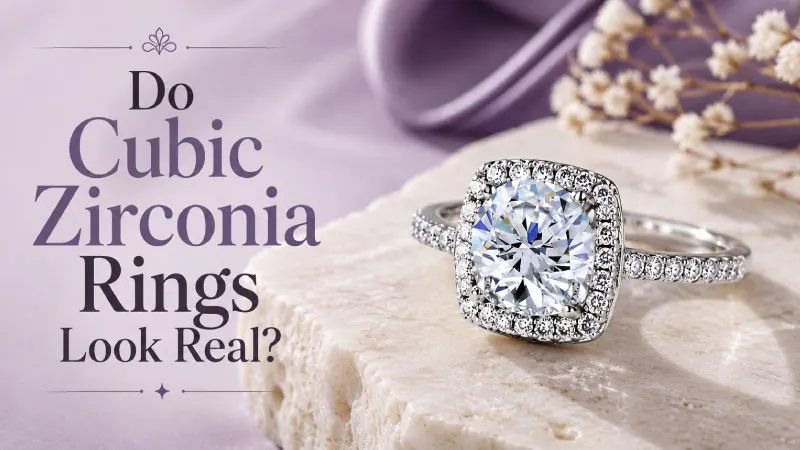
A diamond is natural (or lab-grown) crystallized carbon, while cubic zirconia (CZ) is a man-made crystal of zirconium dioxide. Diamonds are harder (10 vs about 8.5 on the Mohs scale), throw more white sparkle, and keep their look for life. CZ shows more rainbow-colored flashes, scratches and clouds over time, and costs a tiny fraction of the price. Choose diamond for an heirloom piece, and CZ for fashion jewelry or a budget-friendly look. Below, we compare appearance, durability, cost and ethics side by side.
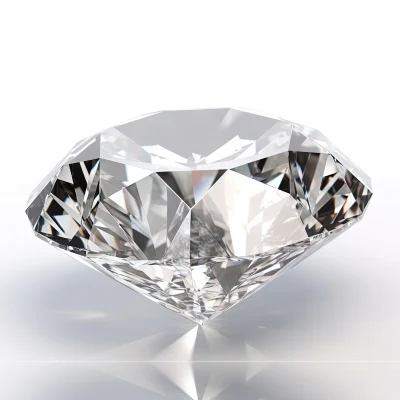
A diamond symbolizes purity and light, a sign of love and commitment! Diamond is a solid form of carbon, with its atoms arranged in a structure called diamond cubic. Its Mohs hardness of 10 makes it the hardest natural substance.
Diamonds are available in two types: natural diamonds and lab-grown diamonds. Both look the same, are crystal clear, and are made of crystallized carbon.
Natural diamonds form over billions of years under intense heat and pressure deep inside the Earth, while lab-grown diamonds are made in a lab in a matter of weeks, with the same chemical and physical properties.
Natural diamonds form roughly 90 to 120 miles below the Earth's surface, in the mantle. At that depth, the pressure is around 50,000 times greater than at the surface, and temperatures are over 1,000°C. Under these conditions, carbon atoms bond tightly into a cubic crystal structure. The process takes from about 1 to over 3 billion years, and volcanic eruptions later carry the diamonds closer to the surface.
Lab-grown diamonds are made with two main methods that recreate these conditions. In HPHT (high pressure, high temperature), carbon is placed in a press with a metal catalyst and exposed to extreme heat and pressure until it crystallizes into diamond. In CVD (chemical vapor deposition), a carbon-rich gas is heated in a chamber, and carbon atoms settle layer by layer onto a small diamond "seed" until a larger crystal grows.
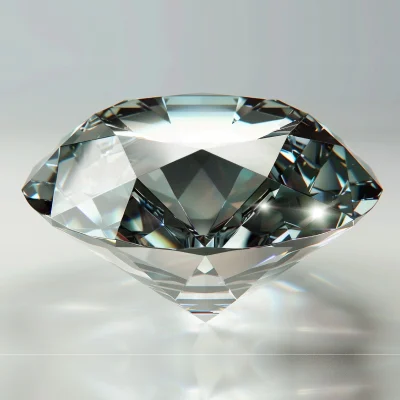
While diamonds are made from carbon, cubic zirconia (CZ) is made from zirconium dioxide (ZrO2). This man-made gem looks very close to a diamond, which has made it the most popular diamond simulant. CZ and diamond both crystallize in the cubic system, which is part of why CZ is such a convincing lookalike. The CZ stones are too-good-to-be-true gemstones that make you wonder: is cubic zirconia real?
Cubic zirconia is a real gemstone material, but it is not a real diamond. Natural cubic zirconia is extremely rare and only found as tiny grains, so all the CZ used in jewelry is made in a lab. Cubic zirconia has a Mohs hardness of 8 to 8.5, below the diamond's hardness of 10.
Even though CZ is lab-made rather than mined, it is a genuine crystal with impressive brilliance and fire. It is not as hard or long-lasting as a diamond, and it should always be sold as cubic zirconia, not as a type of diamond.
Knowing how cubic zirconia is made is important to understanding where CZ gets its beauty. The process starts by melting pure zirconium oxide powder with a stabilizer, such as calcium oxide, magnesium oxide or yttrium oxide, which keeps the crystal in its cubic form. The mixture is heated to around 4,900°F (about 2,700°C) and then cooled slowly so that large, clear crystals form. After cutting, shaping, and polishing, your beloved cubic zirconia stones are ready to be the limelight of the night.
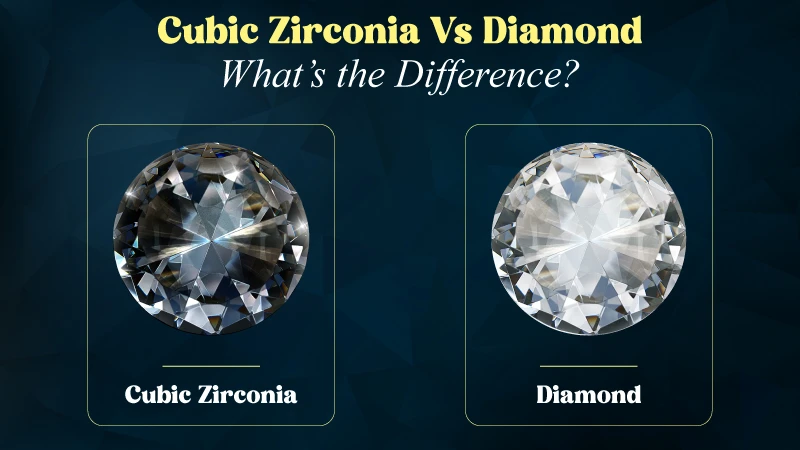
Cubic zirconia and diamonds can look very similar at a glance. However, upon closer evaluation and observation, the differences can be spotted.
Here is an easy breakdown of points to help you differentiate between cubic zirconia and diamonds.
| Comparison | Cubic Zirconia | Diamonds |
|---|---|---|
| Appearance | They are free from imperfections and disperse rainbow-colored lights. | They have subtle imperfections and disperse white light. |
| Composition | It is a crystalline form of Zirconium Dioxide (ZrO2), ranking 8 to 8.5 on the Mohs hardness scale. | It is the crystalline form of carbon with a structure called diamond cubic. It is the hardest known natural material, ranking 10 on the Mohs scale. |
| Durability | It is less durable and long-lasting than diamonds. | It is the hardest and much more durable than CZ. |
| Cost | A 1-carat cubic zirconia usually costs well under $100. | A 1-carat natural diamond usually costs several thousand dollars; lab-grown diamonds cost much less. |
| Ethical Considerations | Cubic zirconia is lab-made, so it involves no mining. | Natural diamonds should come with Kimberley Process certification to be conflict-free; lab-grown diamonds avoid mining. |
A basic difference you can make while comparing Cubic Zirconia vs Diamond in terms of appearance is that natural diamonds often have subtle imperfections, such as tiny crystals, feathers, and clouds. On the other hand, cubic zirconia is usually free from imperfections because it is made under precise conditions. A stone that looks too perfect can be a sign that it is CZ.
Furthermore, CZ shows more rainbow-colored flashes under light, while diamonds give off more white sparkle. This is because CZ has higher dispersion, so it splits light into more colors, while a diamond's higher refractive index gives it stronger white brilliance.
Diamond is pure carbon, while cubic zirconia is zirconium dioxide. This difference in composition affects hardness: diamond ranks 10 on the Mohs hardness scale, making it the hardest known natural material, while cubic zirconia ranks around 8 to 8.5, which is still hard enough for everyday jewelry.
Cubic zirconia's composition, combined with its optical properties and crystalline form, makes it a captivating gemstone with elegance and charm!
Compared with diamonds, cubic zirconia is no competition in terms of durability. Diamond ranks 10 on the Mohs hardness scale, the hardest of all, while cubic zirconia ranks 8 to 8.5. Thus, cubic zirconia stones are prone to scratches and abrasion over time with the daily wear of an active lifestyle!
Lab-grown diamonds cost much less than natural diamonds of the same size and quality, but cubic zirconia is cheaper still. A 1-carat natural diamond usually costs several thousand dollars, while a 1-carat cubic zirconia usually costs well under $100. That makes CZ extremely cost-effective for fashion jewelry, while still offering plenty of shine and brilliance!
Here, ethical considerations include sustainability and eco-friendliness of the stones. Natural diamonds are rare and highly valuable, but mining them has an environmental impact, and buyers should look for Kimberley Process certification to make sure a diamond is conflict-free. Cubic zirconia and lab-grown diamonds are made in a laboratory, so they avoid mining entirely, although producing them still uses energy.
There it is: deciding on Cubic zirconia vs Diamond depends on personal preferences! To choose the right stone for yourself or gifting, you should learn what they are and how to tell them apart. Knowing the specifications of the stone you are about to buy is essential whether you are a new buyer, a learner, or a market veteran.
We hope this article has helped you understand the basics of cubic zirconia vs diamonds. Cubic zirconia jewelry gives you the sparkle of a precious gemstone at a fraction of the price, which makes it ideal for fashion pieces. Diamonds remain the most durable choice and the best stone for heirloom jewelry, considering their brilliance, fire, and hardness.
Find the perfect stone to reflect your unique personality! Shop our cubic zirconia rings, compare our diamond rings, or explore moissanite rings as a middle option.
No. Cubic zirconia is a lab-made crystal of zirconium dioxide. It looks similar to a diamond but has a different composition, hardness and sparkle.
Often, yes. CZ shows more rainbow fire, is slightly heavier, and wears down over time. A jeweler can confirm in seconds with a diamond tester.
Yes. Over years of wear, CZ can scratch and turn cloudy, mostly from soap, lotion and surface wear. Diamonds don't cloud this way.
It depends on how often it's worn and how it's cared for. Jewelers' estimates range from about 2 to 10 years before a daily-worn CZ looks noticeably scratched or cloudy. Regular cleaning and occasional wear make it last longer.
Yes, for fashion jewelry, travel rings or trying out a style before buying a diamond. It isn't an investment, since it has little resale value.
Moissanite is much harder (9.25 Mohs) and more brilliant than CZ, and it lasts a lifetime. It costs more than CZ but far less than diamond.


Affiliations








Copyright BOLD Precious Metals 2026