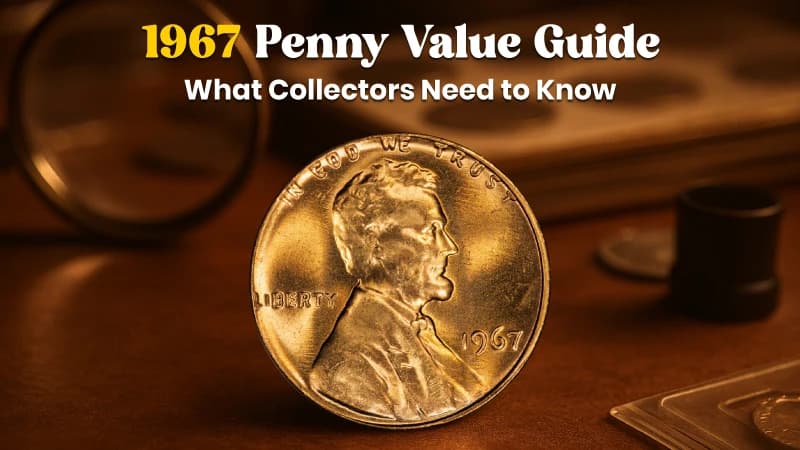
Want to know the 1967 penny value? The Lincoln Cent or the Penny, also the longest running coin of the American coinage, is an exquisite cent to own. This guide has subdivided what influences its value and how you are able to evaluate the value of your 1967 penny!
The specialty of the 1967 penny lies in its historical background, lack of mint marks and the alterations in the minting practice as introduced in the Coinage Act 1965.
The collectors can cherish the 1967 penny by condition, rarity and mistakes. The regular and Special Mint Set types have a unique feature and may attract monetary value.
It is important to store and handle the 1967 pennies properly to preserve the coefficients of value and guidelines recommend the use of airtight containers and little direct handling.
The 1967 penny is a very interesting coin and it is unique in the sphere of numismatics. Coined at a period of major economic shifts, this penny is influenced by the Coinage Act of 1965 that tried to regulate increased costs of coin production besides initiating new rules. The most striking feature about the 1967 Lincoln penny is the lack of any mint marks, a production change of course, which is cost saving in a time of economic uncertainty.
The 1967 penny is popular among numismatists because of its historical background and the lack of mint marks. Knowing its history and design is a plus to appreciate this coin better, much like collectors who study silver coins for their numismatic significance. In current market cycles through 2026, these transitional coins are gaining even more traction following the U.S. Mint's announcement to cease production of the one-cent denomination.
The 1967 penny is a product of a transition era in the U.S. coinage history that was in turn fuelled by socio-economic effects and modernization. The Coinage Act 1965 was important in the development of penny production with the aim of increasing coinage hoarding and the cost of coin production had significantly increased. In this policy, the US Mint stopped using mint stamps between 1965 and 1967.
In 1967, more than 3 billion pennies were minted in Philadelphia, and none were minted with mint marks. The US Mint had implemented this strategy to discourage hoarding and hold the coins in place. A lot of transformations have taken place in America's economic world in the 1967 penny. As of 2026, the historical significance of the Lincoln series has culminated with the release of the final Semiquincentennial designs, marking the end of a century-long tradition.
The 1967 penny is made of 95% copper and 5% zinc, making it look as it does. This penny was not minted with a mint mark like the other years except that it was minted in Philadelphia.
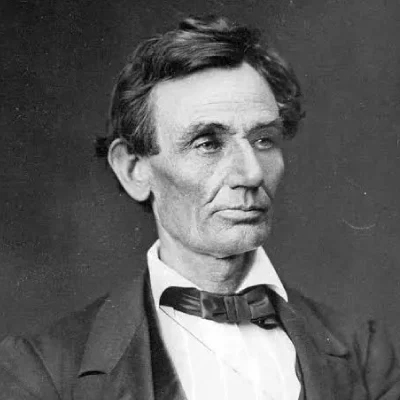
There is the image of President Abraham Lincoln on the obverse side of the coin, designed by Victor David Brenner. The other side bearing the Lincoln Memorial that has been designed by Frank Gasparro. These design features not only make the 1967 penny attractive to the eye but also give us a linkage with the long history of Lincoln and his contribution to America including the Lincoln penny.
Out of the 1967 pennies, there are two major variations of primary coins: regular strikes and Special Mint Set (SMS) pennies. All types possess their peculiar features and worth and become interesting pieces of any collection.
Major flaws like lining dies out of the center and misplaced strikes are the mistakes that can make a penny more valuable. Such variations are significant to collectors who assess or add to a collection of 1967 Pennies.
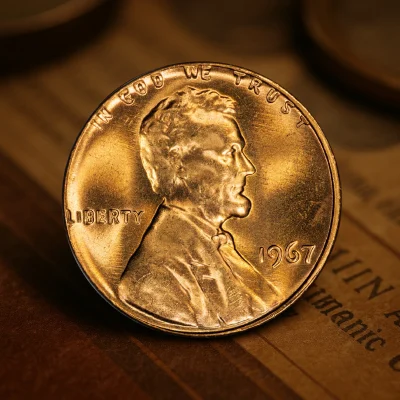
The 1967 normal strike penny, which was produced in Philadelphia and lacked a mint mark, was produced in excess of 3 billion pieces. These common cents are valued by collectors due to their historical significance and lack of a mint mark.
The potential value of these coins in high-grade condition is demonstrated by the noteworthy $4,945 auction record for a standard strike 1967 penny graded MS67. Collectors seek for these excellent examples and are therefore an important component of any collection.
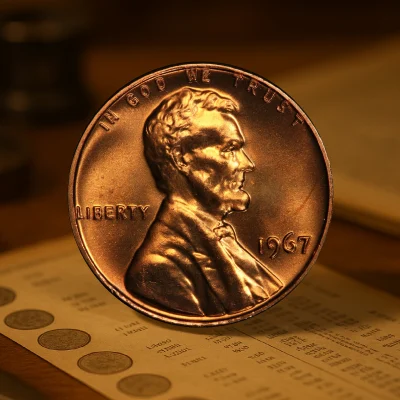
Compared to ordinary strike pennies, 1967 Special Mint Set (SMS) pennies are renowned for their superior quality, with crisper details and smoother surfaces. SMS coins are distinguished by their exceptional craftsmanship, even though they are not as fine as proof pieces.
The 1967 SMS penny's mintage number is 1,863,344. An SMS penny rated SP68 RD DCAM sold for $5,581 at auction, demonstrating the substantial value these coins can have in perfect condition.
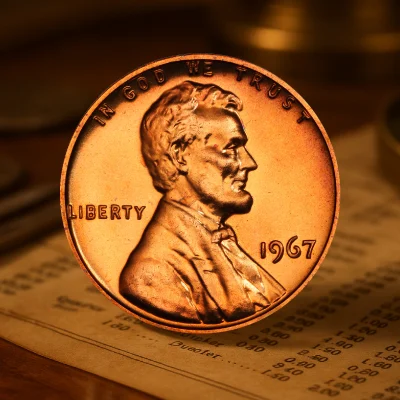
Due to their scarcity, 1967 error coins—such as those with off-center striking or misaligned dies—are highly prized by collectors. For instance, a misaligned die mistake with a large misalignment can sell for about $1,400.
The value of off-center strike pennies can vary from $1 to more than $100, depending on how off-center they are and how visible the date is. Because of these mistakes, every penny is different and might be worth a lot more to collectors. Every dime has a tale to tell.
A 1967 penny's worth is determined by its rarity, condition, and any noticeable flaws. To ascertain the precise worth, collectors must carefully weigh these factors.
Errors or special characteristics can greatly increase a penny's market value. To preserve the coin's purity and, hence, its worth, proper preservation methods are also essential.
The Sheldon grading system, which goes from Poor (P-1) to Mint State (MS-70), is crucial for assessing the worth and condition of coins. Uncirculated coins are rated from Mint State (MS-60) to Mint State-70 (MS-70), while circulated coins are rated from Poor (P-1) to About Uncirculated (AU-58).
By offering expert evaluations and authentication, professional grading services can increase a coin's market worth. A penny's value in the market increases with the grade it receives.
Copper coins are designated as red (RD), red-brown (RB), and brown (BN). Coins with the red designation are typically valued higher than those with the brown designation since they are seen to be the most coveted.
Red is the most desired color, and color designations have a big impact on market value. To properly appraise or sell their copper coins, collectors must be aware of these differences.
Because it is so uncommon, the misaligned die defect on a 1967 penny is especially sought for. For 1967 coins, die cracks and doubled dies are frequent mistake types.
The value of coins with minor doubling or misplaced dies can be much higher than that of coins with regular issues. A high-grade 1967 penny without a mint mark, for instance, has brought up to $4,945 at auction.
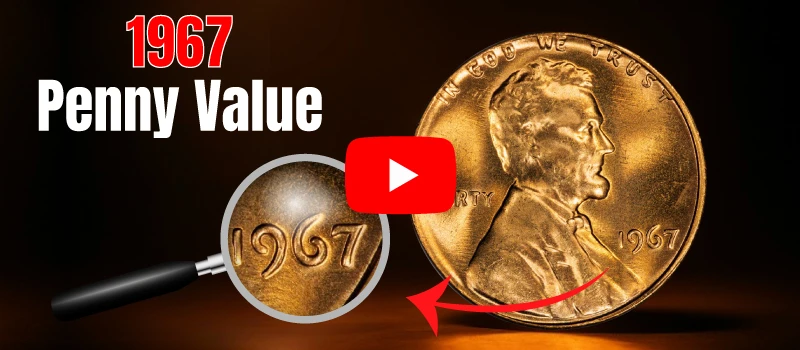
It's important to determine the value of your 1967 cent before selling. Think about the following:
The penny's condition and special qualities can raise its value to hundreds or even thousands of dollars.
Seeking an evaluation from an expert.
Carrying out in-depth research to assist in setting a competitive price.
A 1967 penny's true worth is directly impacted by its state and appearance. Maximizing the possible rewards from your rare pennies is ensured by proper assessment.
There are a variety of websites that provide a tool to evaluate 1967 pennies by type and grade. This is because these platforms value 1967 pennies according to the following criteria.
The value of 1967 pennies is assessed with the help of websites and databases that indicate market tendencies and the outcomes of auctions. These web tools are important in estimating their value.
Professional grading services play a critical role in high grades or error coins. This kind of grading might add value to auction selling prices, for authentication and expert reviews.
It is essential to choose the location where you want to sell your penny of 1967 to receive the greatest price. Online auctions such as eBay and numismatic forums will reach a large customer base but possibly at a cost and competition.
Coin shows and auctions are the best places to sell rare and valuable pennies in different countries as the sellers have the opportunity to interact directly with the potential buyers.
Most of the popular coin selling websites are eBay and numismatic specialized websites with their own advantages and disadvantages, among which eBay can be sold directly and auctioned without any limitations, with the ability to reach a large base of potential customers at the cost of possible charges.
Numismatic forums are highly specialized communities to sell coins and attract lower fees, but possibly a smaller audience.
Auctions have better prices but might have seller charges which should be considered in your selling plan to sell, particularly, in case you wish to cover what you have estimated paid.
Coin Shows: Coin shows are a good way to interact directly with the customers and to sell the unusual and valuable pennies.
The issue of keeping 1967 pennies in their original state is very important in preserving their value. Store in coin holders or albums and think of a climate-controlled storage to avoid being ruined by changes in humidity and temperature.
Always pick coins by the edge and never put your hands directly to the face of the coins to reduce chances of oils and contaminants corroding the coins.
The pennies in 1967 are held in airtight holders and acid free albums to ensure they are not damaged by the environment. A climate-controlled environment will prevent the appearance of dangerous temperature and humidity changes. Issues with storage make 1967 pennies last longer and increase in value.
Moisture is an important factor, it is better to store it with the silica gel packs to extract the water and corrosion is prevented.
Adorned with cotton gloves, oils and dirt will not contaminate the 1967 pennies and this will save the state of your coins. To pick coins, use the edges as much as possible to prevent the transfer of the contaminant between fingers as you can . You should anticipate to retain the quality of the coins and they should not touch the rim.
Contact with coins should be kept at a minimum and they should not be cleaned because that will ruin the surface. The ways of handling coins are important to keep them in good condition and depreciate.
The 1967 penny is not just a coin it is a special time in the history of U.S. numismatic history with its economic shifts and the elimination of mint marks. It is worth depending on condition, rarity and special characteristics like errors or Special Mint Sets.
Its value can be greatly conserved and even increased by its proper treatment, storage, and grading by an expert. Being a casual collector or a serious numismatist, being able to comprehend these factors means that a 1967 penny is not only a great item to be collected but also maybe a valuable item to be held, similar to how investors approach American Silver Eagle coins for their collectible and investment value.
The 1967 penny lacks mint mark due to the decision by the US Mint to skip the mint marks between 1965 and 1967 to fight coin hoarding. So when you come across one it is a historical artifact of that fascinating time!
A penny minted in 1967 may be considered precious when it is in good condition, rare or has some mistakes. Would you watch out, then, on any special characteristics that could increase its value!
To tell how much your penny of 1967 is worth, refer to the Internet sources or seek the help of the professional grading companies which take into account its type, state, and today's fluctuation trends in the market. In this manner you will have a precise estimate depending on your coin.
The best place to sell your 1967 penny is through online marketplaces like eBay or at local coin shows and auctions. Just choose the option that feels right for you!
To preserve the value of your 1967 penny, store it in airtight holders or acid-free albums in a climate-controlled space. Remember to handle it by the edges while wearing cotton gloves to avoid any contamination.


Affiliations











Copyright BOLD Precious Metals 2026