
Affiliations











Copyright BOLD Precious Metals 2026
Widely hailed as the most beautiful coin ever produced by the U.S. Mint, the St. Gaudens gold coin is more than just a piece of precious metal—it is a masterpiece of American artistry and a cornerstone of any serious collection. Whether you are a bullion investor drawn to its.9675 troy ounces of pure gold or a numismatist captivated by its rich history, the St. Gaudens Double Eagle offers unparalleled value and prestige. Explore our curated selection of certified coins and own a tangible piece of the American Renaissance.
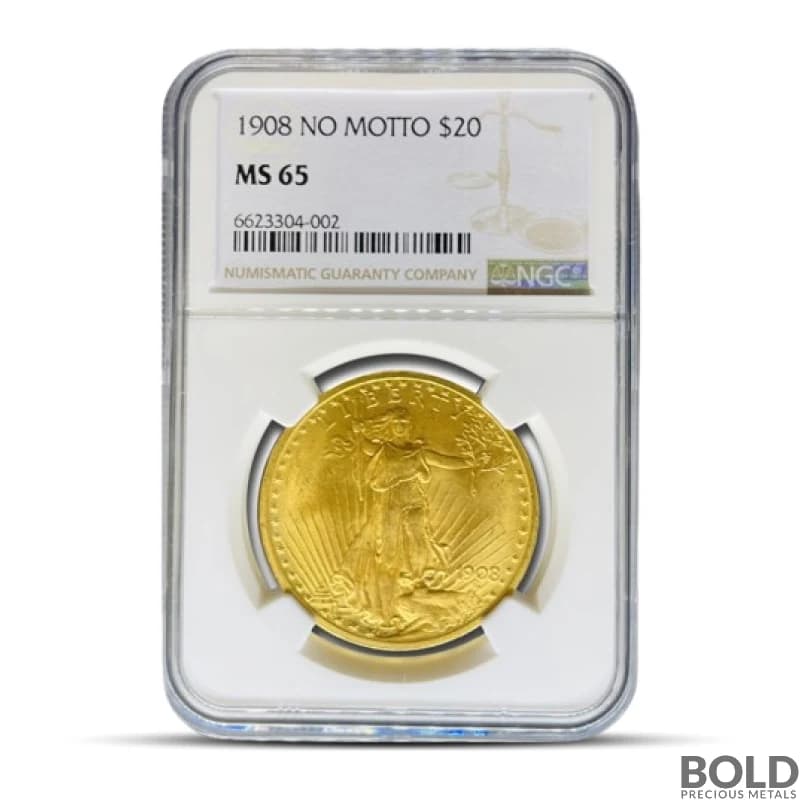
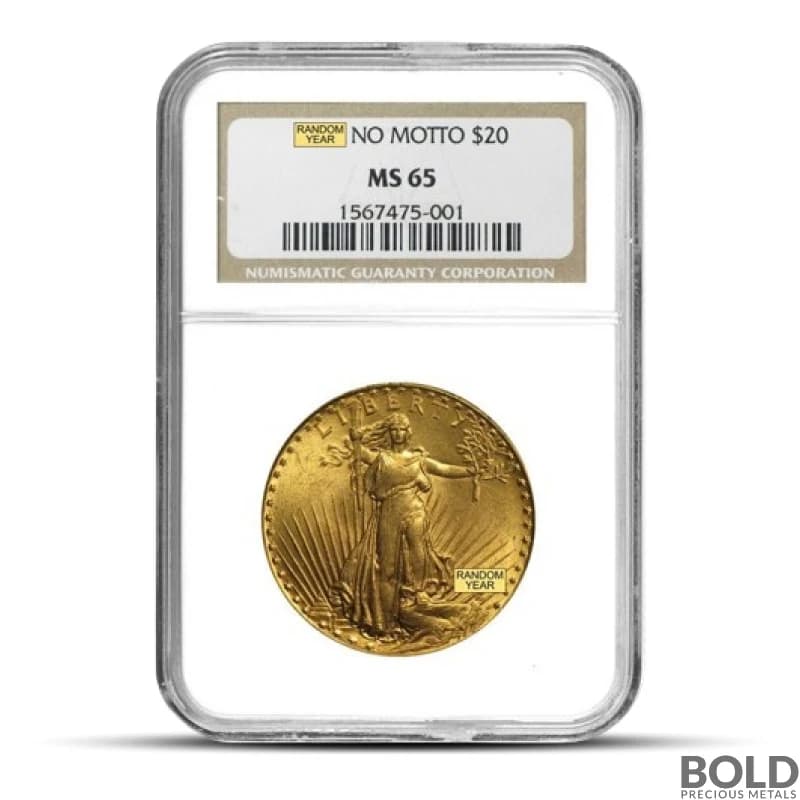
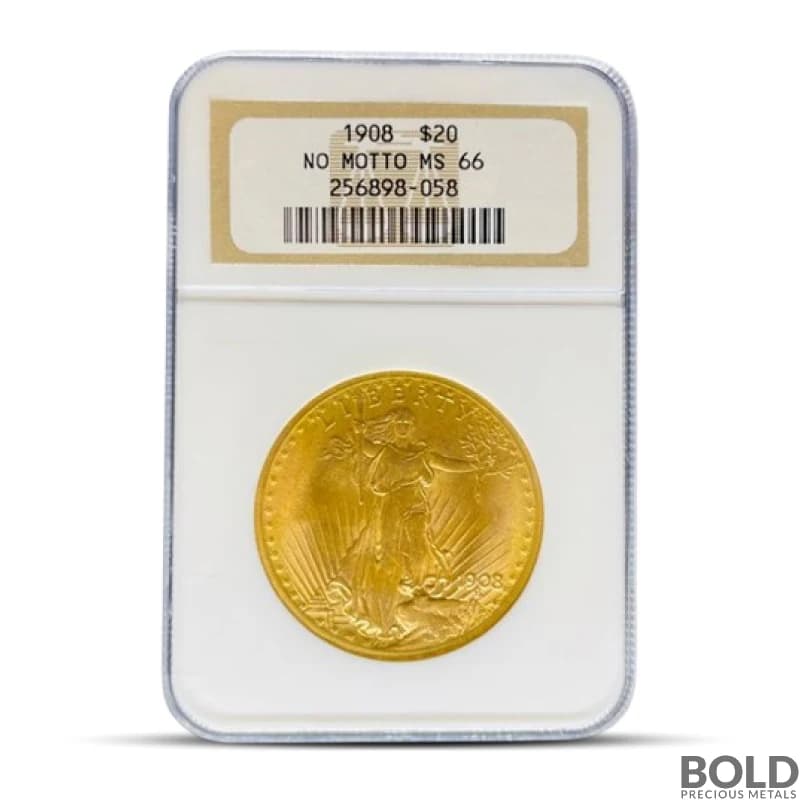
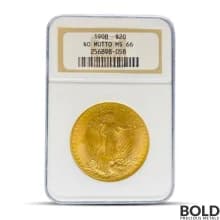
1908 $20 St Gaudens "No Motto" Gold Coin (MS65, NGC or PCGS)
In Stock
AS LOW AS
$4,860.64
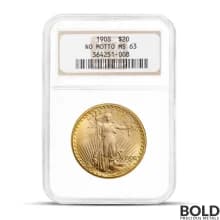
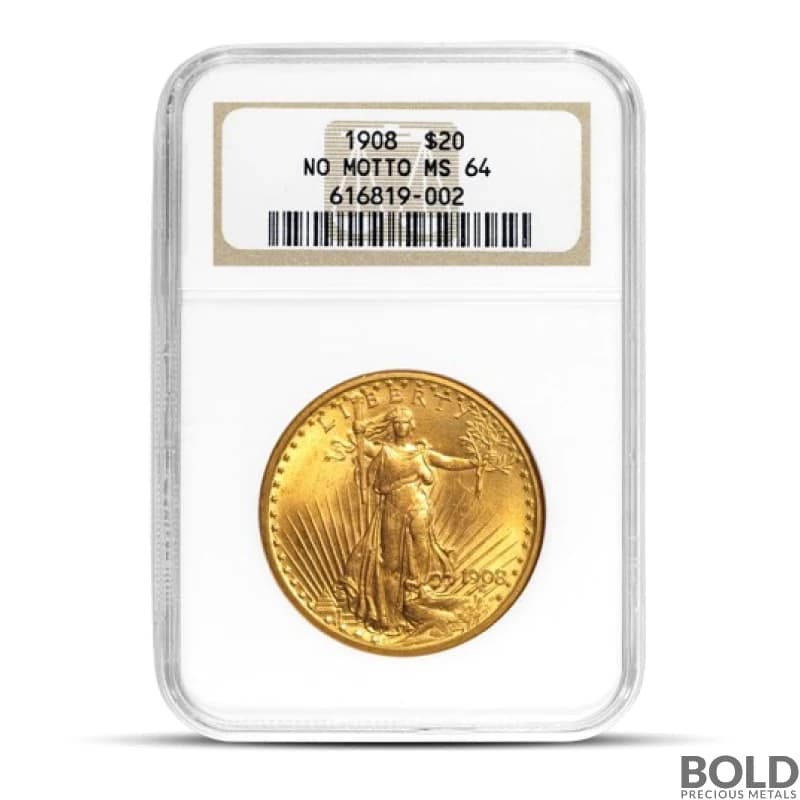
1908 $20 St Gaudens "No Motto" Gold Coin (MS63, NGC or PCGS)
In Stock
AS LOW AS
$4,673.51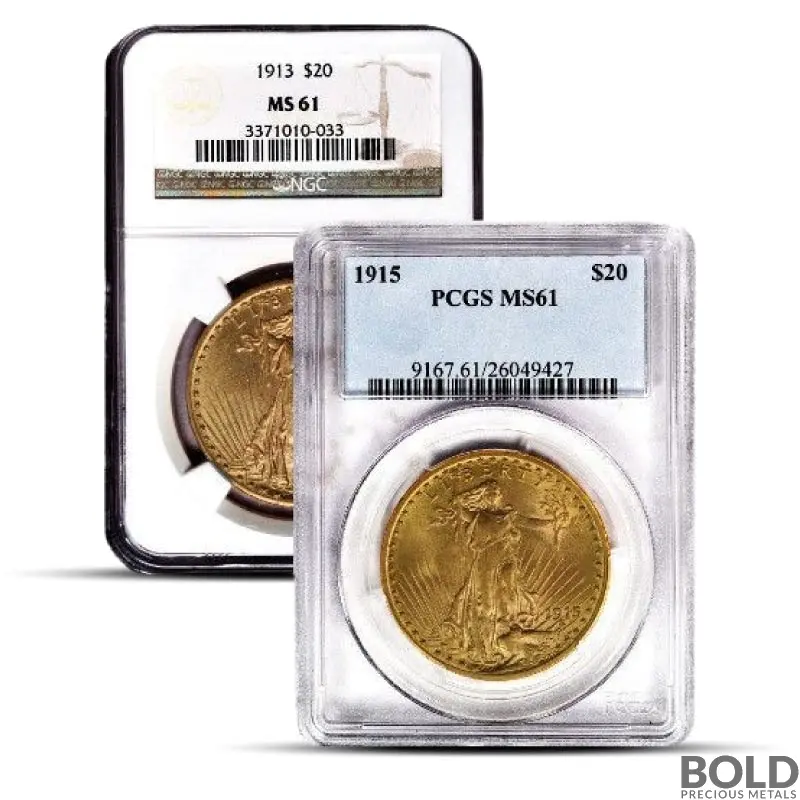
$20 Saint Gaudens Gold Coin (MS61, NGC or PCGS)
Out of Stock
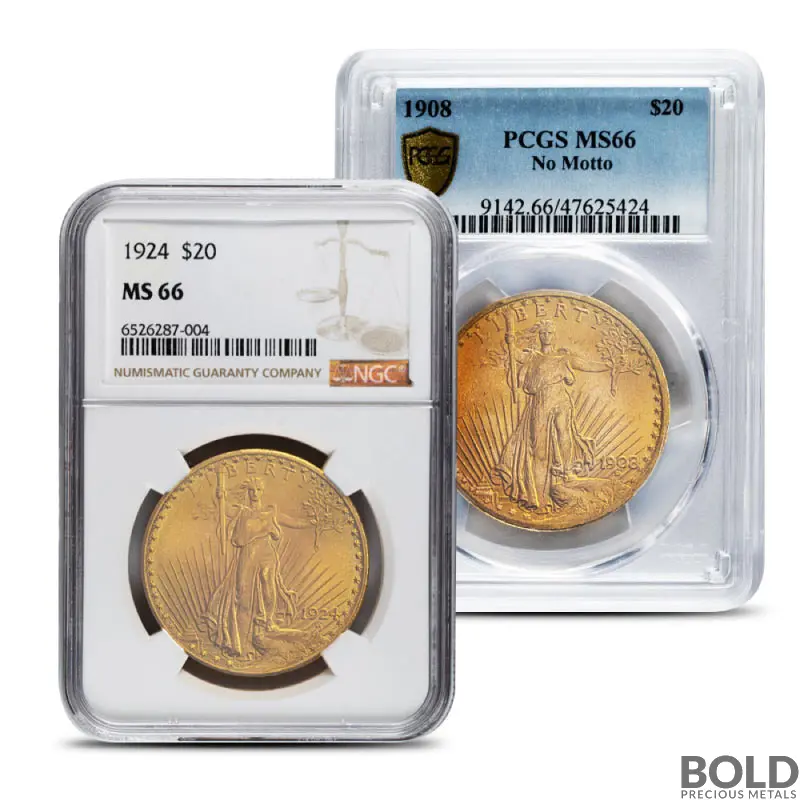
$20 Saint Gaudens Gold Coin (MS66, NGC or PCGS)
Out of Stock
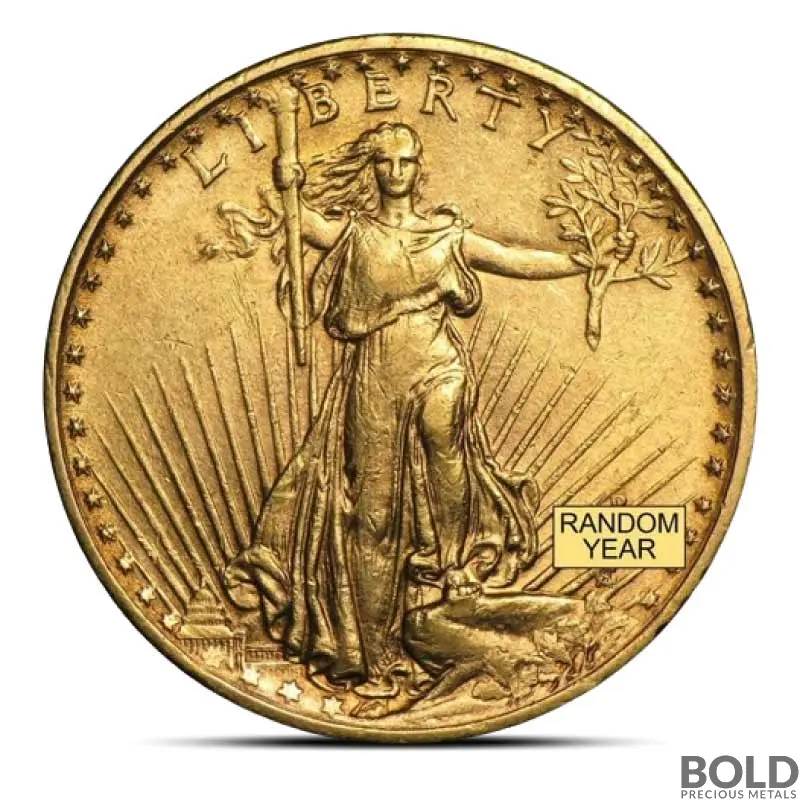
Gold America $20 Saint Gaudens (XF)
Out of Stock
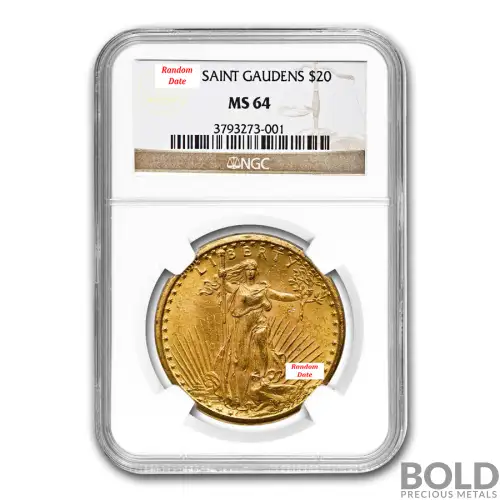
Gold American $20 St. Gaudens - NGC MS64
Out of Stock
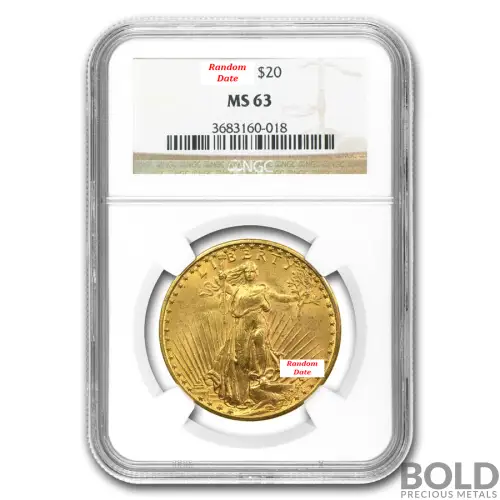
Gold American $20 St. Gaudens - NGC MS63
Out of Stock
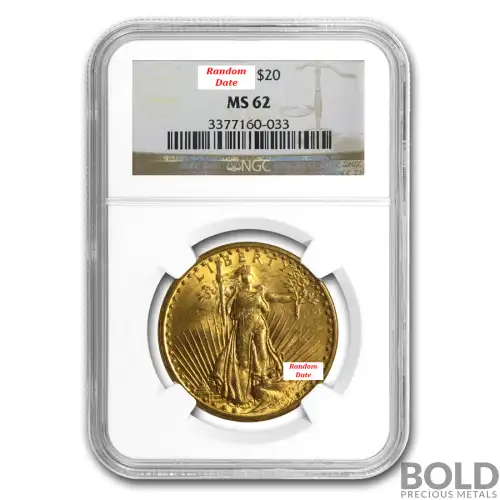
Gold American $20 St. Gaudens - NGC MS62
Out of Stock
This is the question most bullion sites won't answer directly because it requires taking a position. The grade you choose determines how much you pay over melt, how the coin looks in hand, and how easily you can sell it later. Here's how to think about each tier:
| Grade | What It Means | Who Should Buy | Typical Premium Over Melt |
|---|---|---|---|
| VF-20 to EF-45 | Circulated with visible wear; design fully intact | Pure bullion buyers maximizing gold ounces per dollar | Lowest — closest to spot |
| AU-50 to AU-58 | About Uncirculated; light wear on high points only | Value-focused buyers wanting near-mint appearance at lower cost | Low to moderate |
| MS-62 | Uncirculated with some contact marks; no wear | Entry-level collectors and investor-collectors | Moderate |
| MS-63 | Choice Uncirculated; fewer and lighter marks | Investor-collectors building a meaningful collection | Moderate to high |
| MS-64 | Near Gem; very few marks, strong eye appeal | Serious collectors prioritizing quality | High |
| MS-65+ | Gem Uncirculated; exceptional surfaces and luster | Registry collectors, long-term appreciation plays | Very high — exponential jump |
Dealer Insight — Ryan Cochran, Bold Precious Metals
For most buyers — whether you're adding to a gold IRA, building a pre-1933 portfolio, or buying your first Double Eagle — the AU-55 to MS-62 range is where real value lives. The visual difference between an AU-58 and an MS-63 is, in practice, minimal to the naked eye. But the price gap can be 30–50%. That spread is where informed buyers win. If you're not comparing grades side by side in a professional grading context, you're paying for a distinction you can't see.
Not all St. Gaudens dates are created equal, and understanding the difference is the single most important thing you can do before buying. The Philadelphia Mint struck millions of Double Eagles in the early 1920s — these are your common dates, and they're exactly what most gold buyers should be stacking.
1924 · 1925 · 1926 · 1927 (Philadelphia)
Mintages in the 2–4 million range. Trade at modest premiums over gold value in circulated grades. The workhorses of any pre-1933 gold portfolio.
1928 (Philadelphia)
The last year of the series before the Great Depression disrupted production. High mintage, widely available, strong liquidity.
1907 High Relief
Saint-Gaudens's original vision, struck in extremely high relief. One of the most beautiful American coins ever made. Never buy one raw.
1908-D No Motto
Denver Mint, no motto on reverse. Low survival rate relative to mintage. Genuine collector demand at every grade level.
1920-S · 1921
Low mintage issues with most examples having been melted or exported. Genuinely scarce in any grade.
1927-D
One of the rarest business strike Double Eagles. Only 180,000 struck and most were melted. Requires serious research in MS-63+.
1929–1932 Issues
The final years of the series. Low mintages and high melt rates make survivors genuinely rare. Premium dates for advanced collectors.
Overlooked Fact
Many buyers don't realize that the U.S. government's 1933 executive order requiring citizens to surrender gold coins resulted in the mass melting of enormous numbers of late-date Double Eagles. Coins that appeared common in 1932 became genuinely scarce by 1934 — which is why survival populations for the 1929–1932 dates are dramatically lower than their original mintages suggest.
Purchase Decision Framework
Building gold exposure? Stack common dates — most liquid pre-1933 coins on the market with the tightest bid-ask spreads. Building a date set or numismatic collection? Budget for key dates and always insist on PCGS or NGC certification before spending key-date money.
The Counterfeiting Problem
The St. Gaudens Double Eagle was one of the most widely counterfeited American coins of the 20th century. Beyond outright fakes, the series has a long history of cleaned coins — polished or chemically treated to appear as higher grades.
Why Slabs Protect You
PCGS and NGC experts examine every coin under magnification, detect cleaning and alterations invisible to the naked eye, assign an accurate grade, and seal the coin in a tamper-evident holder — the reason any dealer in America will buy back a slabbed Double Eagle without question.
Key Point
Bold carries both PCGS and NGC certified examples across grade ranges. Both services are equally accepted by dealers, auction houses, and IRA custodians. If you have a preference for one service — common among serious collectors — you can filter inventory accordingly.
Gold content per coin — closest to a full troy ounce of any pre-1933 U.S. gold issue.
Standard U.S. $20 gold coinage composition: 90% gold, 10% copper alloy.
Standard for all U.S. gold coinage of the era — same composition as the $10 Indian and $5 Half Eagle.
Prices below are calculated against the live gold spot price to show how Double Eagle melt value scales with the market:
| Gold Spot Price (per troy oz) | St. Gaudens Melt Value | Typical Circulated Premium | Typical MS-63 Premium |
|---|---|---|---|
| $2,000/oz | ~$1,935 | +3–8% | +15–30% |
| $2,500/oz | ~$2,419 | +3–8% | +15–30% |
| $3,000/oz | ~$2,903 | +3–8% | +15–30% |
| $3,500/oz | ~$3,386 | +3–8% | +15–30% |
Premium Context
Numismatic premiums for MS-64, MS-65, and key dates can run significantly higher — from 50% to 300%+ above melt depending on date and grade. Common-date circulated examples offer the tightest premiums and fastest liquidity for buyers whose primary goal is gold exposure.
The $20 St. Gaudens Double Eagle was the product of a direct commission from President Theodore Roosevelt to sculptor Augustus Saint-Gaudens — one of the most celebrated American artists of his era. Roosevelt wanted U.S. coinage that rivaled the artistic beauty of ancient Greek coins. The result, first struck in 1907, is widely regarded as the most beautiful coin the United States Mint ever produced.
Saint-Gaudens did not live to see his design reach circulation — he died in 1907, the same year production began. The coin was struck continuously from 1907 through 1933 across Philadelphia, Denver (D), and San Francisco (S) mint facilities. The series ended abruptly when President Franklin D. Roosevelt signed Executive Order 6102 in 1933, requiring Americans to surrender most of their gold to the Federal Reserve. Millions of Double Eagles were melted. The survivors became the pre-1933 gold market we trade in today.
The famous 1933 Double Eagle — the last date struck — was never legally released into circulation. The single specimen legally owned by a private collector sold at Sotheby's in 2021 for $18.9 million. The series Bold trades begins with the 1907 issues and runs through 1932, with all coins legally owned and freely tradeable by private individuals.
Roosevelt's commission, Saint-Gaudens's masterwork — the year the most beautiful U.S. coin entered production.
FDR's gold surrender order ended the series and created scarcity — transforming circulated coins into collectibles.
Sotheby's auction record — the ultimate expression of the St. Gaudens legend.
IRA Eligibility Notice
Standard circulated and graded St. Gaudens Double Eagles are NOT eligible for inclusion in a Gold IRA. IRS regulations require gold held in an IRA to meet a minimum fineness of .995 — the St. Gaudens, at 90% gold (.900 fineness), falls below that threshold.
IRA-Eligible Alternatives at Bold
.9167 fineness — granted specific statutory IRA exemption by Congress
.9999 fineness — fully IRA eligible, pure 24-karat gold
.9999 fineness — widely accepted by all major IRA custodians