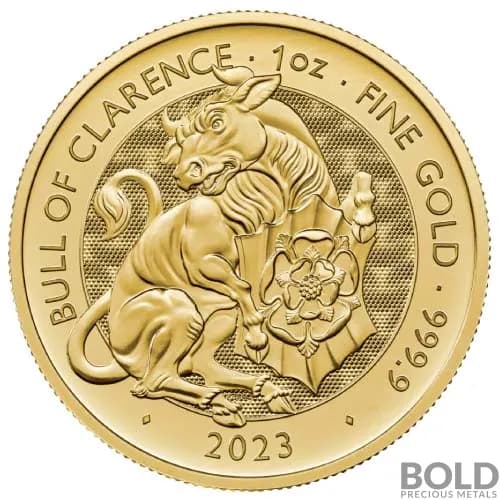
2023 Gold 1 oz Great Britain Tudor Beasts: Bull of Clarence BU Coin
In Stock
AS LOW AS
$5,044.30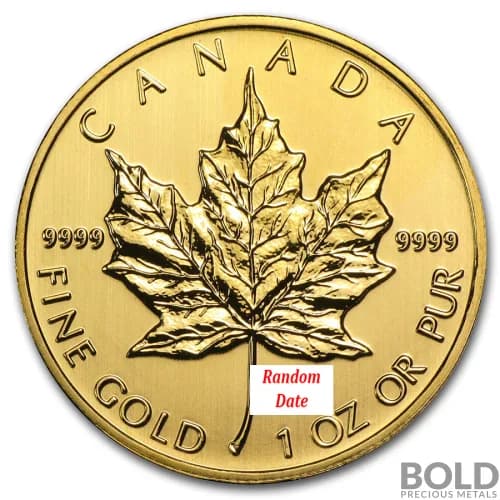
Gold Canadian Maple Leaf *Random Date* - 1 oz
In Stock
AS LOW AS
$4,866.30The gold spot price is the current market price for one troy ounce of .999+ fine gold for immediate delivery on the OTC (over-the-counter) market. It is set by continuous global trading across the COMEX futures exchange, the London OTC market, and major institutional participants — 24 hours a day, five days a week.
When you see "gold is trading at $3,200/oz," that's the spot price. It is not the price of a physical coin in a tube. It is not the price a retail buyer pays at a coin shop. It is the wholesale benchmark price for large-lot institutional gold — a reference number that every physical product is priced against, always with an added premium.
Gold Spot Price — Key Facts
Set by: COMEX futures + London OTC institutional market
Unit: One troy ounce (31.1035 grams) of fine gold
Trading hours: Sunday 6 PM – Friday 5 PM ET (nearly 24/5)
Currency: US Dollars per troy ounce (global benchmark)
Updated: Continuously during trading hours — changes by the second
Retail availability at spot: Not possible — physical gold always carries a premium above spot
Dealer Insight — Ryan Cochran, BOLD Precious Metals
The spot price is the floor, not the price. Every physical ounce of gold you buy has been refined, assayed, stamped, packaged, insured, and shipped before it reaches you. Those real-world costs don't disappear because a website advertises "gold at spot." What the market rewards is minimizing the premium above that floor — and that's the only variable you actually control as a buyer.
There is no such thing as a legitimate retail source for physical gold at spot price. If someone claims to sell gold at spot with no premium, one of three things is true: the product is fake, the premium is buried in a processing fee or shipping charge, or the offer is a bait-and-switch. Understanding where premium money actually goes explains why it's unavoidable — and helps you evaluate which premiums are justified and which are not.
1–3%
Typical Premium on 1 oz Gold Bar
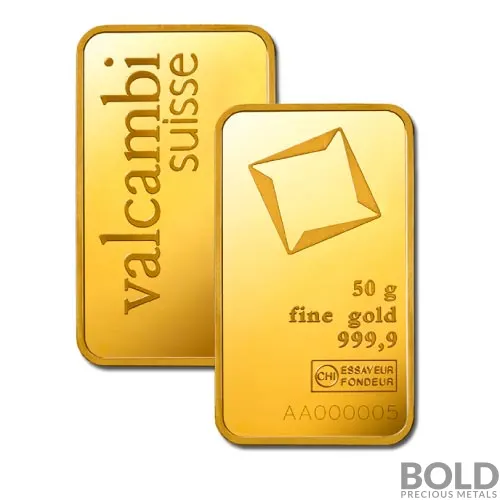
1 oz LBMA cast bars from accredited refiners typically carry 2–4% over spot at BOLD. Minted bars (PAMP, Valcambi) run slightly higher due to production costs.
5–9%
Typical Premium on 1 oz Gold Coin
American Gold Eagles and Maple Leafs carry higher premiums than bars — you're paying for sovereign mint production, legal tender status, and the liquidity premium that comes with global recognition.
Where the premium above spot actually goes:
Refinery & Minting Costs
Turning raw or recycled gold into a .9999 fine bar requires smelting, assaying, and precision rolling or casting equipment. LBMA-accredited refiners run continuous quality programs with third-party certification. That infrastructure has a cost per ounce — typically 0.5–1.5% depending on bar size.
Assay Certification & Tamper-Evident Packaging
Sealed assay cards with serial numbers, weight verification, and authentication chips (like PAMP's Veriscan® system) are not free to produce. This packaging directly increases the resale value of the bar — but it also increases the cost of production.
Dealer Acquisition, Inventory & Hedging Costs
A dealer who buys 500 oz of gold today and sells it over the next 30 days carries spot price exposure for every unsold ounce. Hedging that risk — through futures contracts or other instruments — has a cost. So does the capital tied up in inventory. Those costs are recovered through dealer margin.
Fully Insured Shipping & Secure Logistics
Physical gold cannot be shipped through standard uninsured channels. Every package requires full insured value coverage, carrier agreements, tamper-evident packaging, and signature-on-delivery protocols. For smaller orders, this cost can represent 0.5–1.0% of order value.
Supply & Demand Conditions
When spot price spikes sharply, retail demand surges and physical inventory tightens. Refiners and mints allocate supply to established dealer relationships first. Premiums rise to reflect scarcity — sometimes dramatically. In peak demand periods (2020, 2022), standard premiums doubled or tripled for weeks at a time. That market dynamic is structural and affects every dealer equally.
● Premium Benchmarks
The single most effective strategy for minimizing premiums above spot is choosing the right product format and weight. Here is what the market looks like across major product categories, and where BOLD targets its pricing:
| Product | Typical Market Premium | BOLD Target | Notes |
|---|---|---|---|
| 1 Kilo Gold Bar (cast) | 1.2% – 2.5% | ≤ 1.8% ✓ | Closest to spot available in retail; LBMA accredited refiners only |
| 10 oz Gold Bar (cast or minted) | 2.0% – 3.5% | ≤ 2.5% ✓ | Best entry point for buyers deploying $30k+ at once |
| 1 oz Gold Bar — Cast (LBMA) | 2.5% – 4.5% | ≤ 3.2% ✓ | Best balance of premium efficiency and 1 oz liquidity |
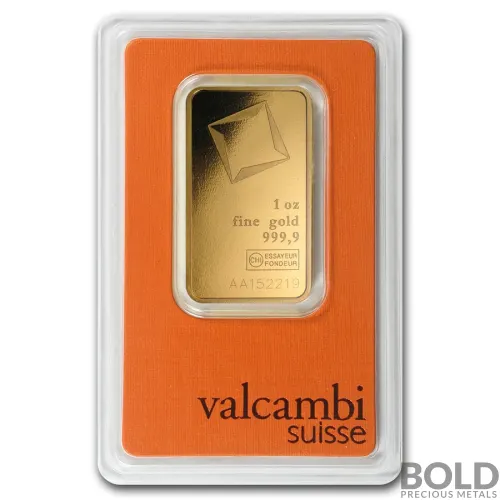
| 1 oz Gold Bar — Minted (PAMP, Valcambi) | 3.5% – 6.0% | ≤ 3.9% ✓ | Sealed assay adds resale value; worth marginal premium difference |
| Gold Krugerrand (1 oz) | 3.0% – 5.0% | Market rate | Tightest global spread of any 22k coin; not IRA eligible |
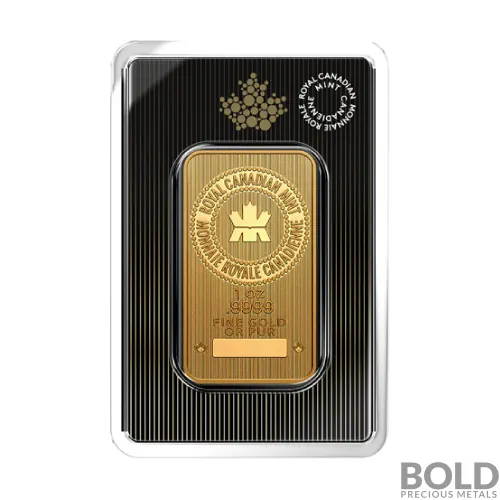
| Canadian Gold Maple Leaf (1 oz) | 4.0% – 7.0% | Market rate | Lowest premium among IRA-eligible 24k coins |
| American Gold Eagle (1 oz) | 5.0% – 9.0% | Market rate | IRA eligible; tightest domestic buy-sell spread at exit |
| Mexican 50 Peso Centenario | 2.0% – 5.0% | Market rate | 1.2057 oz; lowest premium in sovereign coin category; not IRA eligible |
Premiums are approximate market ranges and fluctuate with spot price, supply conditions, and product demand. See BOLD's live product pages for current real-time pricing.
Ryan Cochran — BOLD Precious Metals
"The closest most retail buyers can get to spot is a 1 kg cast bar from an LBMA-accredited refiner — typically 1.2–1.8% above spot at BOLD. That's not spot. But it's the institutional rate that most retail buyers can't access without going through a dealer with direct refiner relationships."
"For buyers who want the benefits of a recognizable coin brand with premium close to bar rates, the Mexican 50 Peso Centenario is consistently the most underappreciated option in the market — 1.2057 oz of gold at 2–5% over spot. It's not IRA eligible, but as a pure accumulation vehicle for personal storage, the math is hard to beat."
Overlooked Fact — The Premium You Pay Is Not Lost at Sale
Many buyers treat the premium over spot as a sunk cost. It isn't. When you sell, the buyer on the other side also pays a premium over spot. What determines your net return is the buy-sell spread — the difference between your purchase premium and your dealer's buy price at exit. Recognized brands (PAMP, Valcambi, RCM, US Mint Eagles) consistently command tighter spreads than generic or obscure products. Buying the right brand today directly improves your net return at sale.
● Buyer Strategy
You cannot buy gold at spot. But you can systematically minimize how much above spot you pay. These are the five highest-impact strategies, ranked by impact:
Buy Larger Bars Over 1 oz Coins
Moving from a 1 oz coin (5–9% premium) to a 1 oz bar (2.5–4.5%) saves 2–4% per ounce. Moving from a 1 oz bar to a 10 oz bar saves another 0.5–1.5%. On a $30,000 gold position, these format choices easily save $600–$1,500. This is the single highest-impact lever available to retail buyers.
Pay by Bank Wire or ACH — Not Credit Card
Credit card and debit card processing fees run 3–4% at most dealers and are either built into the price or added at checkout. Bank wire and ACH transfers eliminate this cost entirely and qualify for BOLD's lowest available pricing tier. On a $10,000 order, this choice alone saves $300–$400.
Choose Cast Over Minted When You Don't Need Presentation
Minted bars (mirror-polished, branded, individually sealed) cost more to produce than cast bars. Both are .9999 fine, both from LBMA-accredited refiners, both liquid at any major dealer. For pure accumulation, a cast bar from Argor-Heraeus or a generic LBMA refiner typically saves 0.5–1.5% over a minted PAMP bar of identical weight.
Buy Into Spot Dips, Not Spot Spikes
Premiums widen when spot surges because physical supply tightens and demand surges simultaneously. Buying during stable or declining spot periods typically means tighter premiums and better product availability. The premium on a 1 oz Eagle in a stable market is 5%. In a panic-buying spike, it can reach 12–15%. Timing your purchase to market conditions matters as much as dealer selection.
Buy From a Dealer With a Published Price Match Policy
Dealers who publish their premiums openly and offer price-match guarantees are structurally incentivized to stay competitive. BOLD's Price Match Guarantee means you don't need to shop exhaustively to get the market's lowest available premium — if you find a verified lower price on the same product, we match it. Transparency and competition are the buyer's best tools.
Buyer Warning — "Gold at Spot" Scam Patterns
Several fraudulent patterns use "gold at spot" as bait. Watch for: (1) Spot-price offers with separate "handling," "processing," or "vault" fees totalling 10%+ at checkout. (2) Spot-price offers on gold that requires a minimum purchase of 100+ oz. (3) Spot-price claims on gold with no assay, no serial number, and no refiner identification. (4) "Spot price" offers in exchange for wire transfers to offshore accounts with no published business address. Legitimate dealers price transparently — the premium is listed before you add to cart, not revealed at checkout.
Live Premium Published on Every Page
Premium above spot is displayed explicitly on every product listing before you add to cart. No checkout-stage surprises.
Price Match Guarantee
Find a verified lower premium on the same product at a competing dealer? We match it. Zero obligation, no negotiation required.
LBMA-Accredited Refiners Only
Every gold bar from PAMP, Valcambi, RCM, Perth Mint, or Argor-Heraeus. No generic, unverified, or counterfeit risk inventory.
Wire & ACH Pricing Tiers
Bank wire and ACH orders qualify for our lowest premium tier — 3–4% below credit card pricing on every product.
Real-Time Spot-Linked Pricing
Prices update continuously during market hours. What you see at checkout reflects actual live spot — not a number set at market open.
Sealed Assay Packaging
Every bar ships in original sealed assay. That seal is worth 1–2% at resale — we protect it from our vault to your door.
Fully Insured Shipping
Every order ships fully insured at no additional cost. Your gold is covered from our facility to your door.
Live Buyback Prices
Real-time buy-back prices posted alongside sell prices on every product. Know your spread before you commit to a purchase.
No. The gold spot price is a wholesale institutional benchmark — it is never the retail price for physical gold. Every physical gold product carries a premium above spot that covers refinery costs, packaging, insurance, dealer margin, and logistics. The closest retail buyers can get to spot is typically a 1 kg cast bar from an LBMA-accredited refiner at approximately 1.2–1.8% above spot. Anyone claiming to sell gold at spot with no additional cost is either misrepresenting their pricing or misrepresenting the product.
The lowest premiums available to retail buyers are on 1 kilo cast gold bars from LBMA-accredited refiners — typically 1.2–2.5% above spot under normal market conditions. 10 oz bars follow at 2.0–3.5%, and 1 oz cast bars at 2.5–4.5%. Gold coins from sovereign mints carry higher premiums (5–9%+) reflecting minting costs, legal tender status, and the liquidity premium built into globally recognized brands.
When spot price rises sharply, retail demand surges simultaneously. Mints and refiners have fixed production capacity — they cannot instantly increase output to meet demand spikes. Physical inventory is consumed faster than it can be replenished, and dealers must allocate scarce supply by raising premiums. During the 2020 COVID surge and the 2022 rate-shock period, standard premiums on Eagles and Maple Leafs doubled or tripled for weeks. This is a structural feature of the physical gold market, not dealer price-gouging.
Not entirely. When you sell physical gold, the buyer on the other side also pays above spot. The premium is not simply lost — what determines your net return is the buy-sell spread: the difference between your purchase premium and the dealer buy price at exit. Recognized brands (PAMP, Valcambi, RCM, US Mint Eagles) consistently command tighter spreads than generic products because buyers trust their authenticity and don't require independent verification. Choosing the right brand at purchase directly improves your outcome at sale.
Yes — at BOLD and at most reputable dealers. Credit card processing fees run 3–4% and are either embedded in the product price or charged separately at checkout. Bank wire and ACH transfers have no processing fee, which allows dealers to offer a meaningfully lower price tier. On a $10,000 gold purchase, choosing bank wire over credit card typically saves $300–$400. This is the highest-impact single decision available to most buyers after product selection.
Gold spot price refers to the current market price for one troy ounce of pure gold. Melt value refers to the intrinsic gold content value of a specific item — calculated as spot price × gold content in troy ounces. For a .9999 fine 1 oz bar, melt value and spot value are nearly identical. For a 22k (91.67% fine) American Gold Eagle, melt value is spot price × 0.9167 — but the coin still trades above that at retail because of its brand, legal tender status, and liquidity premium. Understanding this distinction matters when evaluating what you're actually paying for.


Affiliations











Copyright BOLD Precious Metals 2026