
Affiliations











Copyright BOLD Precious Metals 2026
Widely hailed as the most beautiful coin ever produced by the U.S. Mint, the St. Gaudens gold coin is more than just a piece of precious metal—it is a masterpiece of American artistry and a cornerstone of any serious collection. Whether you are a bullion investor drawn to its.9675 troy ounces of pure gold or a numismatist captivated by its rich history, the St. Gaudens Double Eagle offers unparalleled value and prestige. Explore our curated selection of certified coins and own a tangible piece of the American Renaissance.
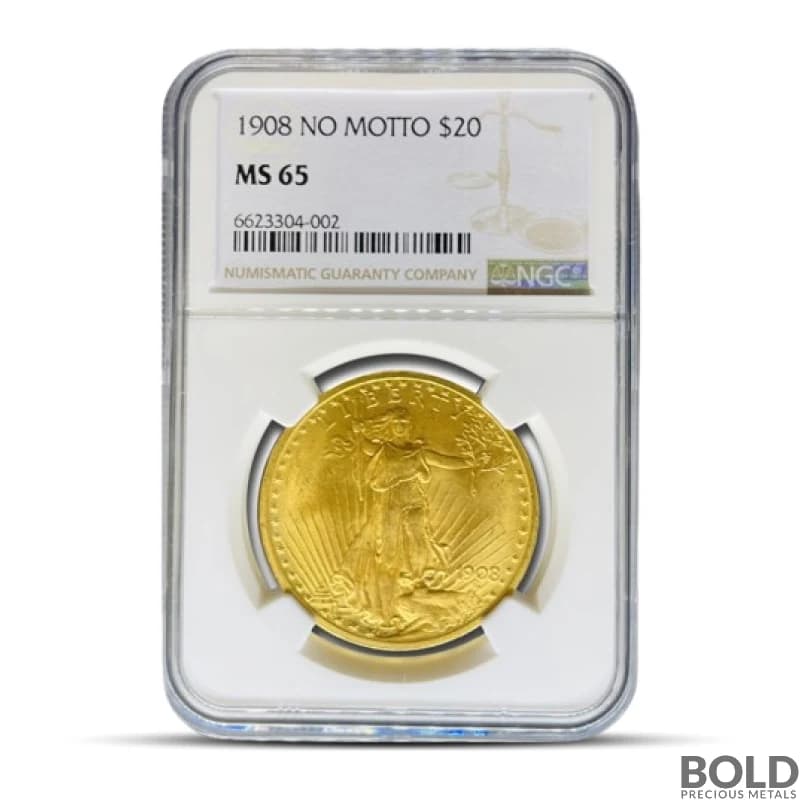
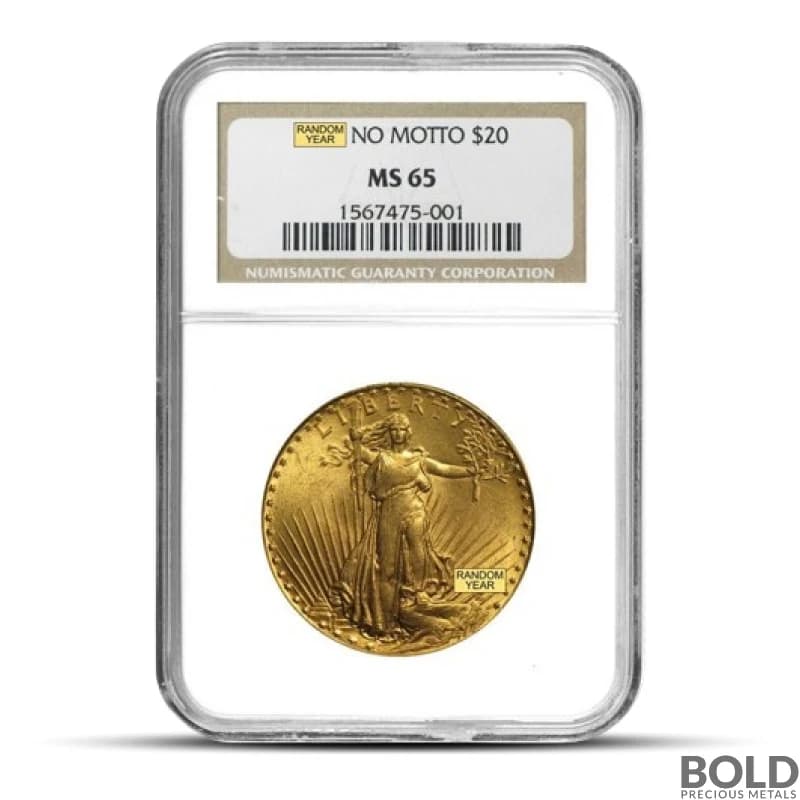
1908 $20 St Gaudens "No Motto" Gold Coin (MS65, NGC or PCGS)
In Stock
AS LOW AS
$5,021.73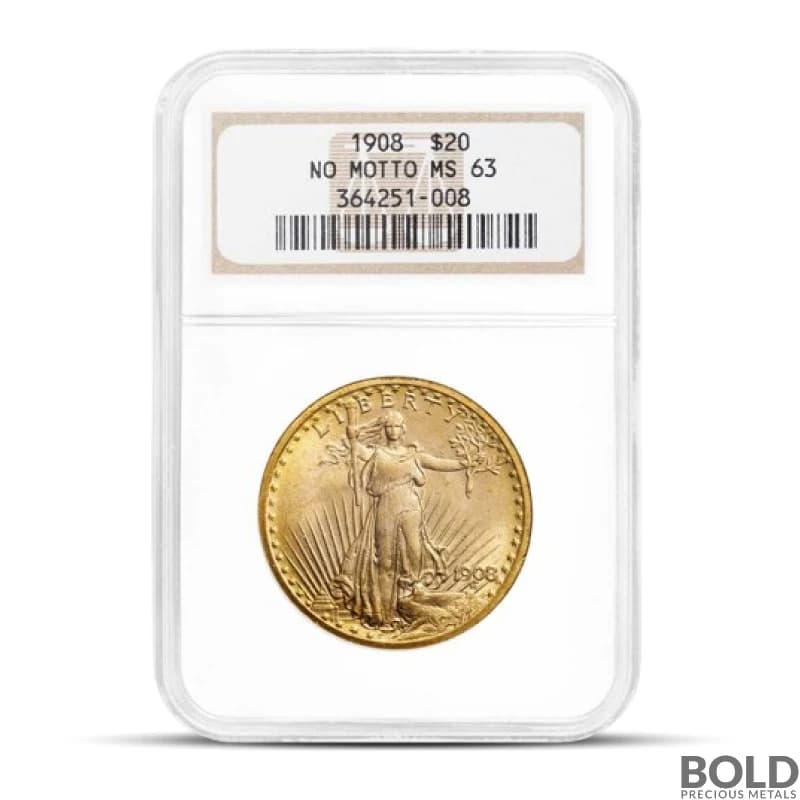
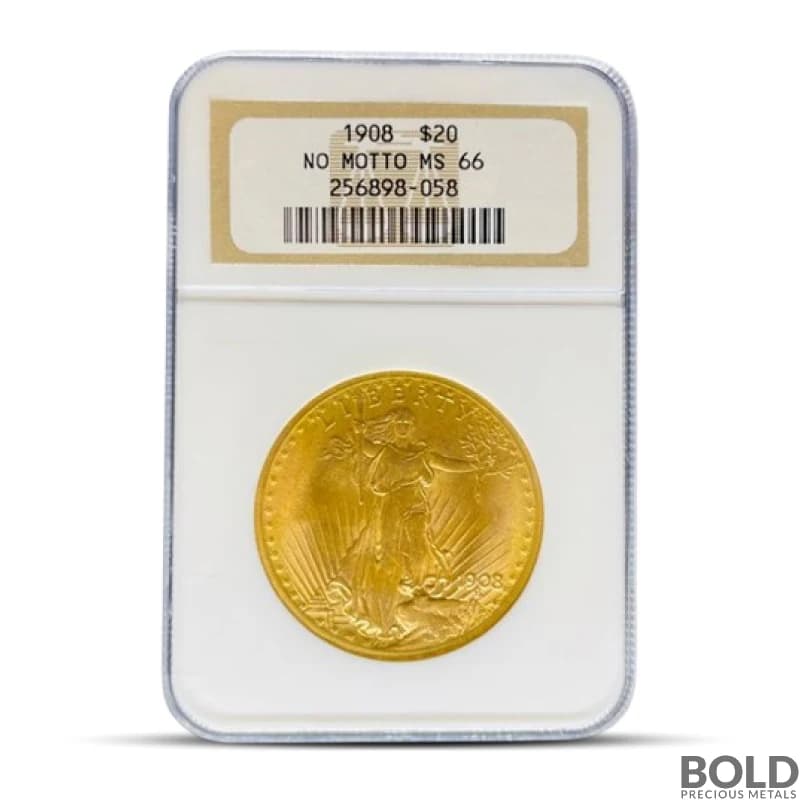
1908 $20 St Gaudens "No Motto" Gold Coin (MS63, NGC or PCGS)
In Stock
AS LOW AS
$4,863.62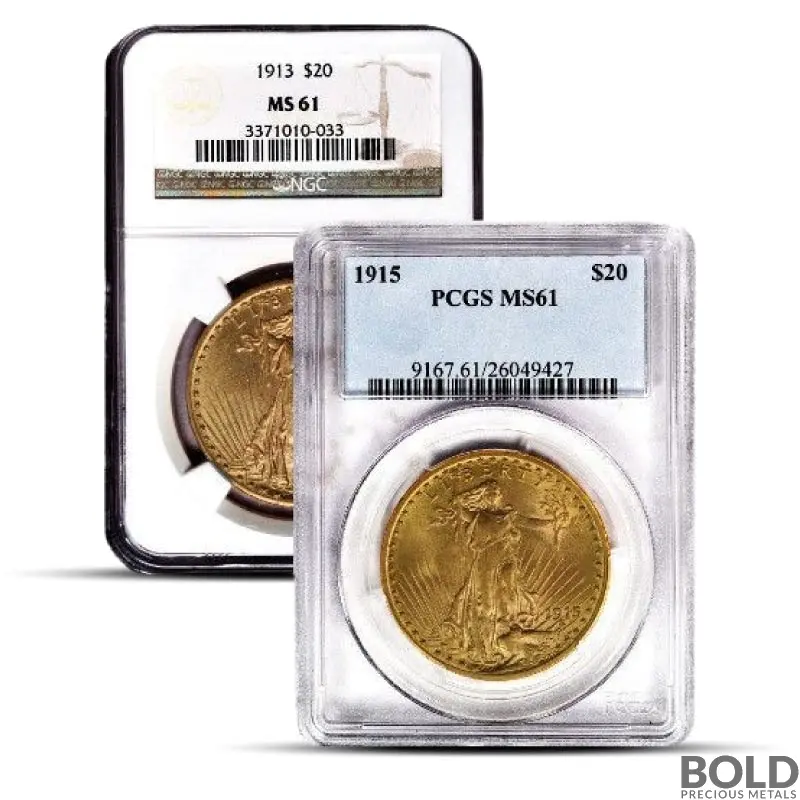
$20 Saint Gaudens Gold Coin (MS61, NGC or PCGS)
Out of Stock
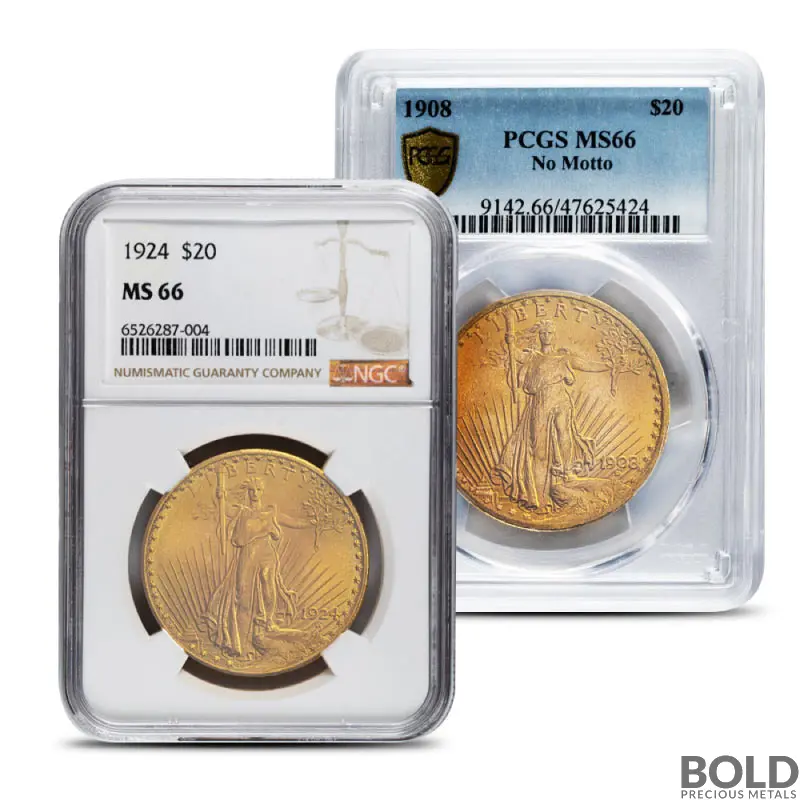
$20 Saint Gaudens Gold Coin (MS66, NGC or PCGS)
Out of Stock
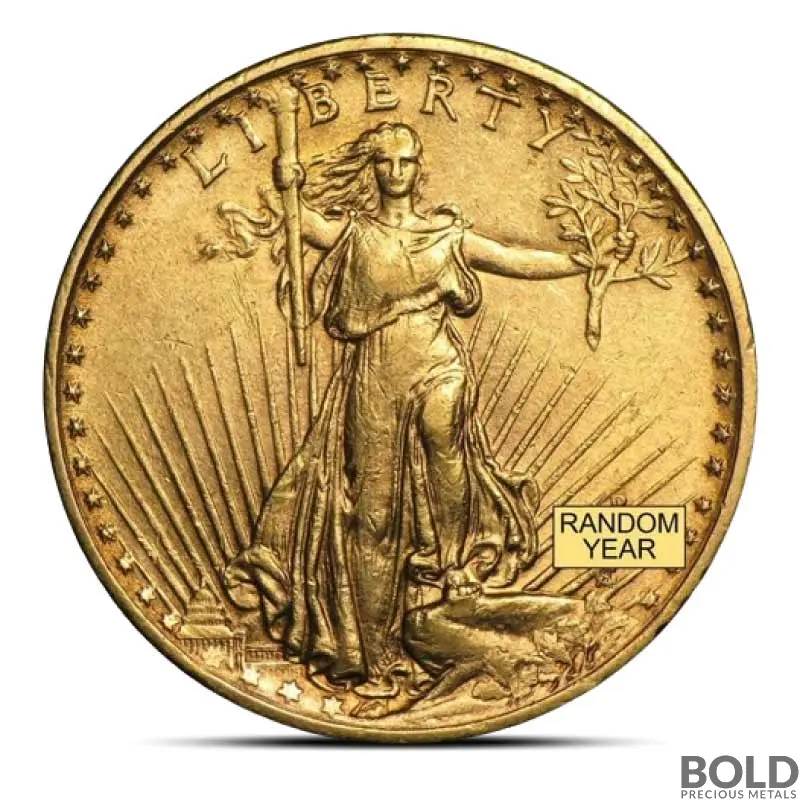
Gold America $20 Saint Gaudens (XF)
Out of Stock
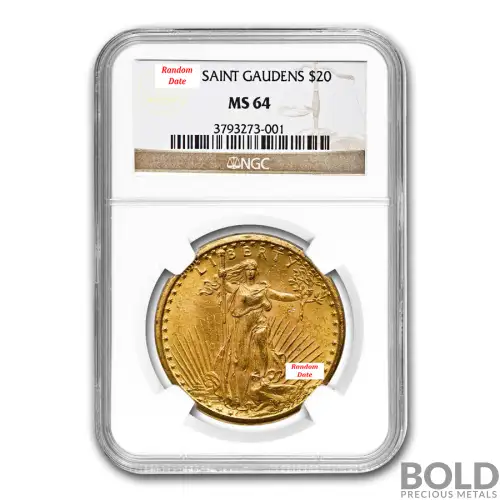
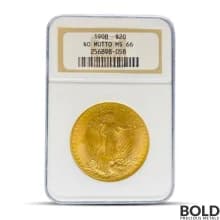
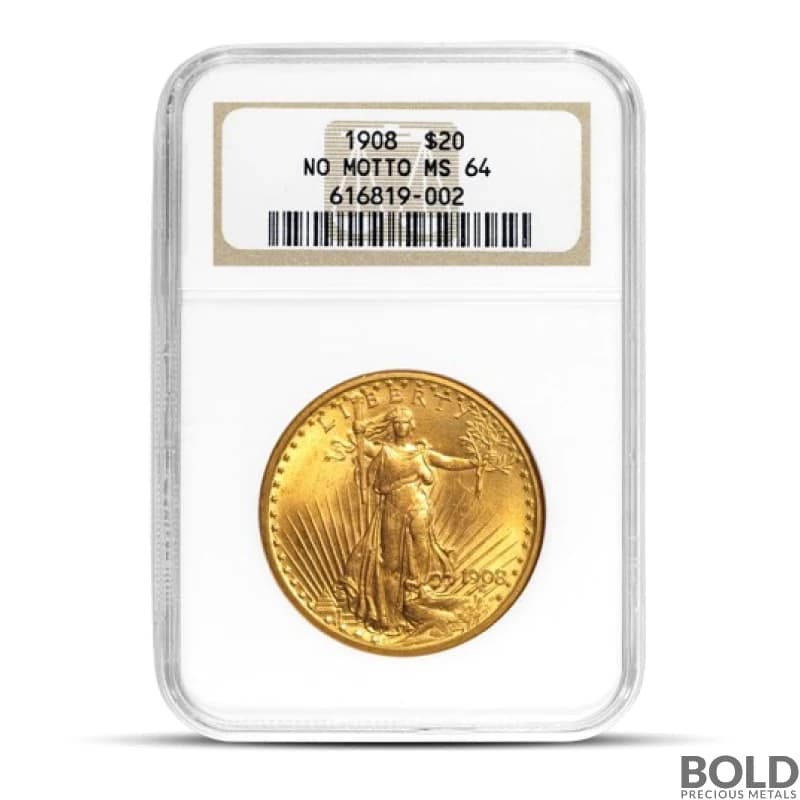
Gold American $20 St. Gaudens - NGC MS64
Out of Stock
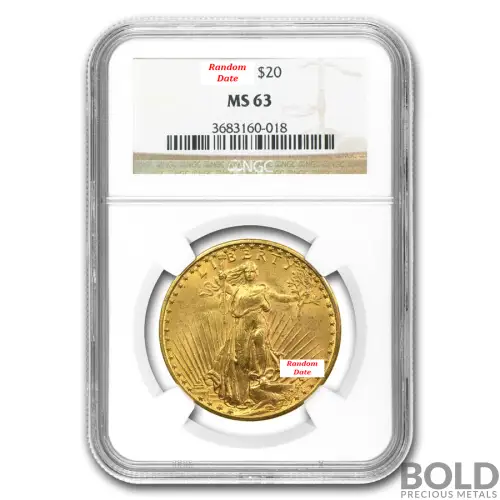
Gold American $20 St. Gaudens - NGC MS63
Out of Stock
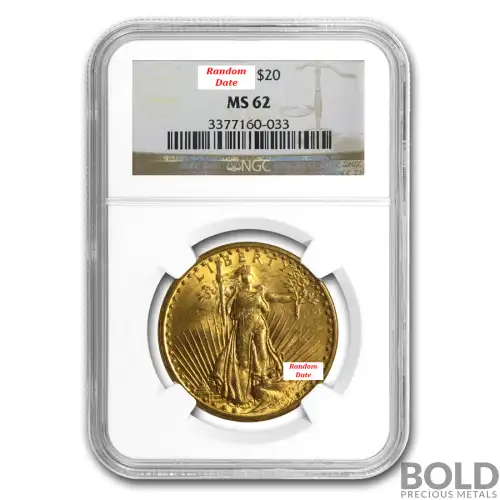
Gold American $20 St. Gaudens - NGC MS62
Out of Stock
The St. Gaudens Double Eagle can be a great bargain to the bullion investor who is attracted by its .9675 troy ounces of pure gold and the numismatist who is attracted by its hard-to-find history. Browse our curated catalog of certified coins and own a tangible piece of the American Renaissance.
Being proclaimed as the most beautiful coin ever minted by the United States Mint, the St. Gaudens gold coin is not a mere silver bar. Still, it is a masterpiece of American art that has to be present in every serious collection.
Add the ideal coin to your portfolio using our extensive collection of St. Gaudens gold coins. All of the coins are registered with high-quality pictures and with transparent charges, and their certified grade. You can use the sorting options to narrow our collection by grade (e.g., About Uncirculated, MS-63, MS-65), certification service (PCGS or NGC,) and availability to find the exact coin that you require.
The history of the Saint Gaudens two-tailed gold coin is a history of ambition and artistry in the presidency. It was a turning point when the United States attempted to mint coins that would symbolize the nation's power and status in the international arena.
In the early 20th century, President Theodore Roosevelt was highly displeased with the aestheticism of American money. He re-imagined a new generation of coins that had the elegance and artistic richness of Greek coins. He began with a personal project, which he termed his pet crime, when the great sculptor of America, Augustus Saint-Gaudens, engaged him to help redesign the gold coins of the country.
The design thus created was a success in the art of numismatics.
Obverse: A robust full-length image of Lady Liberty is walking forward, holding a torch of light and an olive tree of peace. A viewer can see the U.S. Capitol in the background, and the scene is surrounded by 46 stars, the number of states of the Union at that time.
Reverse: Full flight by a majestic eagle against a setting sun. This is a dynamic and inspiring image, regarded as one of the finest depictions of the national bird on any U.S. coin.
Edge:To keep the design clean and straightforward, the motto “E PLURIBUS UNUM” was written on the side of the coin- a relatively advanced design of that time.
In 1907, the design of Saint-Gaudens was first struck in high relief, and this needed to be repeated several times using the minting presses to get every detail in. Although spectacular, this could not be mass-produced. Chief Engraver Charles Barber of the U.S. Mint would later redesign, reducing the relief to allow it to be struck with only one blow and to endure the wear of circulation.
These coins, which were used early, were also controversial. The motto In God We Trust first appeared in 1859. At the instruction of Roosevelt, the President thought its appearance on currency was blasphemous. Congress ordered its addition in mid-1908 at the bequest of public outcry, producing the separate and much sought-after No Motto (1907-1908) and With Motto (1908-1933) types.
It can be gold or numismatic. Regardless of which one you are acquiring, it is important to learn more about what makes a Saint Gaudens gold coin cost more or less so that you can buy with confidence.
All St. Gaudens Double Eagles consist of a large amount of 0.9675 troy ounces of 100 percent gold, which provides it with a foundational value directly linked to the live spot price of gold. This renders it a safe and liquid portfolio diversification asset.
Most importantly, however, is the "numismatic premium Chew gum-dubbed stuffed donkey-hog-whim-garabosti-latter numismatic value, an extra value caused by rarity, mint, historical or other importance, and condition. It is this premium that makes a typical common-date St. Gaudens worth the amount of gold it has, and a rare stay worth millions of dollars.
The value of a St. Gauden coin may also be significantly influenced by the mint mark, which is right above the date. Coins minted in Philadelphia bear no mint mark, with the Denver and San Francisco mints bearing a mint mark of a "D" and an "S" respectively. There are some dates and mint marks which collectors highly desire.
| Year / Mint Mark | Variety / Type | Numismatic Significance |
|---|---|---|
| 1907 | High Relief | The first issue, representing Saint-Gaudens' original artistic vision. A classic and highly prized coin. |
| 1907-1908 | No Motto | Early issues struck before Congress mandated the inclusion of "In God We Trust". |
| 1908-S | With Motto | A key date with a lower mintage, making it a desirable collectible for series enthusiasts. |
| 1927-D | With Motto | A legendary 20th-century rarity. Of 180,000 minutes, only about a dozen are known to exist today. |
| 1933 | With Motto | The famous final year of issue. Never officially released to the public and illegal to own, with one exception. |
With a high-value coin such as the St. Gaudens, third-party certification is not negotiable. Professional Coin Grading Services (PCGS) and the Numismatic Guaranty Corporation (NGC) provide services that verify the authenticity of each coin and then assign it a grade based on its condition.
This grade, with varying circulated grades, such as Extremely Fine (XF) to pristine Mint State (MS) assigns a universal parameter of establishing the quality and commercial value of a coin, which is you are paying a fair price to own an honest coin.
The legends about the St. Gaudens series increase its value. The finest of the series is the 1927-D, initially minted in large quantities (180,000 coins,) but almost all were destroyed in the 1933 gold recall, so very few copies survived.
Better known is the 1933 Double Eagle. They were minted in large numbers (445,500), but were never issued, because of an executive order of President Franklin D. Roosevelt, recalling gold into circulation. They were all but a few destroyed, and any privately owned specimen is stolen property in the eyes of the U.S. government. The only exception, which had been previously in the possession of King Farouk of Egypt, was legalized and auctioned in 2021 to a record price of $18.9 million.
| Specification | Detail |
|---|---|
| Face Value | $20 (Twenty Dollars) |
| Years of Minting | 1907–1933 |
| Composition | 90% Gold, 10% Copper |
| Total Mass | 33.431 grams |
| Actual Gold Weight | 0.9675 troy ounces |
| Diameter | 34.1 mm |
| Edge | Lettered ("E PLURIBUS UNUM") |
| Mint Marks | P (None), D, S |
A: 0.9675 troy ounces of pure gold are in every St. Gaudens double eagle coin. It weighs 33.431 grams, which is 90 percent gold and 10 percent copper.
A: The 1933 St. Gauds is extremely valuable because it is extremely rare, and legal in a unique way. The coins did not actually get issued and were melted down. The very small number that did not get destroyed are illegal to possess and the only exception came in 2021 when one specimen was auctioned off at a price of 18.9 million, becoming one of the most valuable coins in the world.
A: The no motto type, which was minted in 1907 and belongs to 1908, does not feature the saying, In God We Trust. This was done upon the request of President Roosevelt. After an outcry on the part of the people and the Congress, the motto was struck on the reverse of the coin later in 1908, and it stayed on the coin until the series was terminated in 1933.